Engineer's Toolbox Visit www.hansarobotics.com
Category Banner

Top Mask Folding Machine Types for Global Buyers

Choosing the right Mask Folding Machine is not simply a matter of comparing speed and price. Global buyers must examine mask formats, folding accuracy, material compatibility, automation levels, and service support. A machine producing 120 pieces per minute may appear attractive. However, unstable feeding can create wrinkles, uneven folds, and costly production pauses.

Dr. Peter Tsai, a recognized filtration specialist and mask-production expert, has emphasized, “A mask must balance filtration, breathability, and fit.” That principle also guides equipment selection. A flat-mask folding machine may suit standardized medical mask lines. A KN95 or N95 folding machine usually demands tighter control over nose-clip placement, layered fabric, and edge forming. Servo-driven systems provide precise adjustments. Semi-automatic models offer a lower entry cost and easier manual oversight.

Small details matter. Check the folding wheel, guide rails, ultrasonic stations, and control panel. Ask whether operators can change dimensions without lengthy downtime. Confirm the supplier’s testing records, spare-parts availability, installation training, and after-sales response. These practical questions often reveal more than a glossy brochure.

No machine is perfect. Some high-speed systems sacrifice flexibility. Some affordable models require more operator attention. Buyers may also underestimate factory space, compressed-air needs, or maintenance skill. This guide compares the main Mask Folding Machine types for international purchasers. It focuses on real production conditions, not impressive numbers alone. The best choice should match the product, workforce, budget, and expected growth. Reliable output matters more than speed on paper.
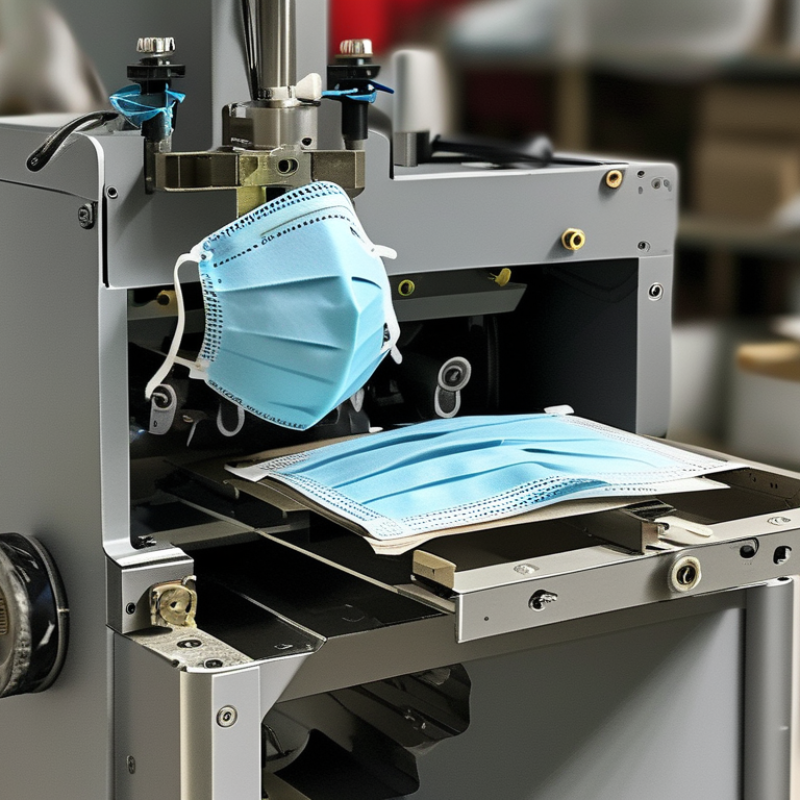
Top Mask Folding Machine Types for Global Buyers

How Mask Folding Machines Work and What They Produce

Top Mask Folding Machine Types for Global Buyers

Mask folding machines turn rolls of nonwoven material into structured, wearable mask bodies. The process begins with roll unwinding and tension control. Guide rollers keep each layer aligned as the material moves forward. A folding unit then creates pleats or a central fold, depending on the mask design.

Common machine types include flat pleat folders, vertical folding machines, and automatic contour folding systems. Flat pleat models form repeated folds for disposable face masks. Vertical systems shape folded respirator-style masks with a center crease. Automatic systems may also add nose strips, ear loops, edge welding, and cutting. The finished output is usually a folded mask body, not always a complete packaged product.

Heat sealing, ultrasonic welding, or pressure-based bonding secures the layers. Sensors monitor position, material presence, and production speed. Operators still need to inspect fold depth, seal strength, and edge trimming. In production trials, a small tension change can create uneven pleats across the roll. That problem is easy to miss.

Machine capacity depends on material thickness, mask size, and automation level. Higher speed does not guarantee better output. I have seen fast lines produce distorted folds when settings were poorly matched.

Regular cleaning also matters, especially around rollers and welding heads. A practical buyer should test actual materials before confirming machine performance. Samples reveal more than a specification sheet.

Main Types of Mask Folding Machines for Different Production Needs

Mask folding machines vary according to product shape, output, and workforce. Flat-mask folding machines suit high-volume production of three-layer disposable masks. They usually combine material feeding, pleating, ultrasonic welding, and cutting. Their straight layout makes operation easier. It also supports faster changeovers between common mask sizes.

Fish-shaped folding machines create a folded respirator-style mask with a central seam. They are useful when products need compact storage and closer facial contact. Cup-style forming and folding equipment supports molded respirators, but it requires more precise tooling. Semi-automatic machines can fit smaller factories with changing orders. Fully automatic lines reduce manual handling and maintain steadier output. However, they need more floor space and better technical support. The most expensive option is not always the best option.

Tips: Confirm the target mask shape before requesting quotations. Check material width, folding accuracy, welding strength, and hourly output. Ask for sample production using your actual fabric. Measure noise, compressed-air use, and cleaning access during testing. Production data can be less impressive after several hours. Plan for operator training and replacement parts. Also, leave room for future size changes. A machine optimized for one design may become restrictive later.

Key Features That Separate Manual, Semi-Automatic, and Automatic Models

Top Mask Folding Machine Types for Global Buyers

Key Features That Separate Manual, Semi-Automatic, and Automatic Models

Manual mask folding machines suit small workshops, frequent product changes, and buyers testing a new production line. Operators place the material, align the fold, and control each cycle by hand. These machines usually cost less and require simpler maintenance. However, output depends heavily on operator skill. Uneven pressure can create inconsistent folds, especially during long shifts.

Semi-automatic models add powered folding, while workers still handle feeding, positioning, or finished-mask removal. This arrangement often improves speed without demanding a fully automated facility. Adjustable guides, foot pedals, counters, and tension controls are valuable features. In practical use, stable feeding matters more than impressive speed figures. A poorly aligned guide can waste material quickly.

Automatic folding machines integrate feeding, folding, pressing, counting, and sometimes inspection. They are suitable for larger orders requiring repeatable dimensions and continuous operation. Buyers should check changeover time, sensor accuracy, spare-part access, and operator training needs. More automation does not always mean fewer problems. Complex controls can slow production when settings are unclear. During evaluation, inspect real samples, measure fold accuracy, and ask for maintenance records. A machine that runs steadily at a moderate speed may outperform a faster model with frequent stops.

How to Compare Capacity, Compatibility, and Operating Efficiency

Top Mask Folding Machine Types for Global Buyers

How to Compare Capacity, Compatibility, and Operating Efficiency

Capacity should be measured beyond the advertised cycles per minute. Ask for tested output with your actual mask size, fabric layers, and folding pattern. A machine producing 120 pieces per minute may deliver less after pauses, material changes, and rejected units. Record stable output during an eight-hour trial. Short tests can hide problems.

Compatibility affects every later decision. Check the working width, material thickness range, folding tolerance, and sealing method. Some machines handle nonwoven layers smoothly but struggle with elastic bands or thicker filter media. Confirm electrical standards, compressed-air requirements, spare-part availability, and operator training in your destination market. Request sample runs using your own materials. Paper specifications are not enough.

Operating efficiency depends on changeover time, sensor accuracy, access for cleaning, and fault recovery. A clear control screen helps, but simple mechanical access often matters more. Review energy use per thousand masks, not only motor power. In factory assessments, I watch how quickly an operator clears a misfeed without stopping the entire line. That detail is easy to overlook. High speed is not always efficient. Maintenance records should include downtime causes, rejected quantities, and recurring adjustments. A realistic comparison leaves room for human error, uneven material rolls, and imperfect setup conditions.

Top Mask Folding Machine Types for Global Buyers - How to Compare Capacity, Compatibility, and Operating Efficiency
Machine Type Typical Output Capacity Primary Mask Format Compatible Materials Typical Automation Level Changeover Flexibility Operating Efficiency Best-Fit Application Key Buying Consideration
Semi-Automatic Folding Machine 10–30 masks/minute Simple flat-fold or pleated mask components Spunbond nonwoven, melt-blown nonwoven, common elastic ear loops Operator-assisted feeding, folding, or transfer High; suitable for frequent product adjustments Moderate
Lower investment and simpler maintenance, but labor requirements are higher.
Small-batch production, pilot lines, and markets with variable demand Check labor requirements, folding consistency, and the availability of manual safety controls.
Automatic Flat-Fold Mask Machine 40–80 masks/minute Three-panel or multi-pleat flat-fold masks Common nonwoven multilayer structures, filter media, nose strips, and elastic loops Automatic material feeding, folding, sealing, and product discharge Moderate; usually requires tooling or parameter changes for different sizes High
Consistent folding and reduced direct labor when materials are stable.
General disposable mask production for institutional and commercial use Compare usable speed rather than no-load speed, and verify compatibility with the intended layer count.
Automatic V-Fold Mask Machine 50–100 masks/minute V-fold or vertical-fold respirator-style masks Nonwoven outer layers, melt-blown filter layers, nose clips, headbands, or ear loops Automatic forming, folding, ultrasonic or thermal sealing, and counting Moderate to low; fold geometry and tooling are usually format-specific High
Good repeatability at stable line speed; material alignment is critical.
Respirator-style disposable masks requiring a defined center fold Confirm the folding depth, mask dimensions, nose-clip placement, and sealing method before purchase.
Automatic C-Fold Mask Machine 40–80 masks/minute C-fold or inward-fold disposable masks Spunbond and melt-blown nonwoven layers, elastic bands, and plastic or metal nose strips Automatic folding, edge sealing, ear-loop attachment, and counting Moderate; format changes may require guide, mold, or sensor adjustment High
Efficient for continuous production with a standardized mask design.
High-volume production where compact folded packaging is required Evaluate fold accuracy, edge-seal quality, and the machine’s ability to handle different elastic-loop positions.
High-Speed Inline Folding Line 80–120 masks/minute Standardized flat-fold, V-fold, or pleated mask formats Stable multilayer nonwoven webs, filter media, nose strips, and elastic or headband assemblies Fully automatic, often with synchronized feeding, forming, inspection, counting, and packing interfaces Low to moderate; optimized for long production runs and limited format variation Very High
High throughput and low unit labor cost, but line balance and material quality are essential.
Large-volume manufacturing and integrated packaging operations Assess actual line efficiency, planned maintenance time, reject handling, and integration with downstream packaging.
Ultrasonic Folding and Sealing Machine 30–100 masks/minute Flat-fold, pleated, V-fold, and selected respirator-style designs Thermoplastic nonwoven layers, polypropylene-based filter media, elastic, and compatible nose strips Automatic or semi-automatic, depending on feeding and product-transfer configuration Moderate; welding horns and guides may need replacement for different formats High
Fast heat-free bonding with consistent seams when amplitude, pressure, and speed are correctly set.
Manufacturers seeking clean, rapid bonding without conventional adhesive or hot-bar sealing Verify ultrasonic frequency, horn life, weld strength, noise control, and compatibility with the actual material stack.
Modular Folding and Ear-Loop Assembly Line 40–100 masks/minute Multiple flat-fold or pleated mask configurations Nonwoven multilayer materials, elastic ear loops, headbands, nose strips, and optional valve components Configurable automatic modules with separate folding, sealing, loop-welding, inspection, and counting units High compared with dedicated lines; modules can be adjusted or replaced High
Good balance between production capacity and product flexibility, subject to line synchronization.
Export-oriented factories serving several mask specifications or customer requirements Compare module compatibility, spare-part standardization, control-system access, and future expansion options.
Note: Capacity figures are typical planning ranges for new equipment under stable production conditions. Actual output depends on mask size, layer structure, material consistency, folding geometry, sealing method, operator skill, inspection settings, changeover time, and reject rate. Before ordering, request a material trial and confirm the guaranteed usable output, finished-mask dimensions, safety requirements, electrical specifications, and applicable market compliance documentation.

Global Buyer Considerations for Selecting the Right Machine Type

Top Mask Folding Machine Types for Global Buyers

Global Buyer Considerations for Selecting the Right Machine Type

Choosing a mask folding machine starts with the product, not the brochure. Automatic folding lines suit stable, high-volume production. Semi-automatic machines offer lower entry costs and easier manual control. Modular systems can support future upgrades, but extra modules increase maintenance points. Buyers should confirm mask dimensions, fold structure, fabric layers, and acceptable output speed before requesting quotations.

Electrical compatibility matters across markets. Check voltage, frequency, plug standards, air pressure, and factory power capacity. The machine should also match locally available materials, including nonwoven fabric, nose strips, and elastic components. A supplier’s technical documents should explain tolerances, safety functions, cleaning access, and changeover procedures. Clear records make factory acceptance testing more reliable.

Service planning often decides whether a machine performs well after installation. Ask about remote support, spare-part availability, operator training, and response times in your region. Measure the complete footprint, including material storage and maintenance space. A cheap machine may become expensive when shipping delays stop production. However, the most advanced system may be excessive for a small workshop. This is where buyers can misjudge the decision. Compare total operating cost, not only the purchase price. Request sample runs using your actual materials, because impressive demonstrations may hide setup difficulties.