

Engineer's Toolbox
Visit www.hansarobotics.com

Top Automatic BOV Aerosol Filling Machine Manufacturers are judged by more than production speed. They must deliver stable filling, accurate crimping, reliable sealing, and repeatable quality. An Automatic BOV Aerosol Filling Machine should handle product dosing and propellant charging with careful control. It should also support clean changeovers between approved formulations.
“Consistency matters more than speed when every valve must seal,” says aerosol-packaging engineer Dr. Elena Marconi. Her observation reflects a practical truth. A fast machine is not automatically a dependable machine. Small variations in piston pressure, valve placement, or container alignment can create visible defects. Sometimes, the quiet details matter most.
The strongest manufacturers provide integrated testing systems. These may include weight checks, leak detection, vacuum monitoring, and reject tracking. Stainless-steel contact parts can simplify sanitation. Clear access panels help operators inspect filling heads and conveyor movement. Real production trials reveal more than attractive brochures. Ask for batch records, service response times, training details, and validation support.
Safety must remain central. Reputable suppliers design equipment for lawful, approved aerosol products and follow applicable industrial standards. They also explain ventilation, guarding, grounding, and emergency-stop requirements. This information should never be treated as optional.
No manufacturer is perfect. Some machines promise impressive output but struggle during frequent format changes. Others offer excellent engineering but limited local support. That is why buyers should compare verified references, not only specifications. The best choice usually balances accuracy, maintainability, compliance, and long-term technical assistance. A careful factory visit can expose weaknesses early. It can also prevent an expensive mistake.
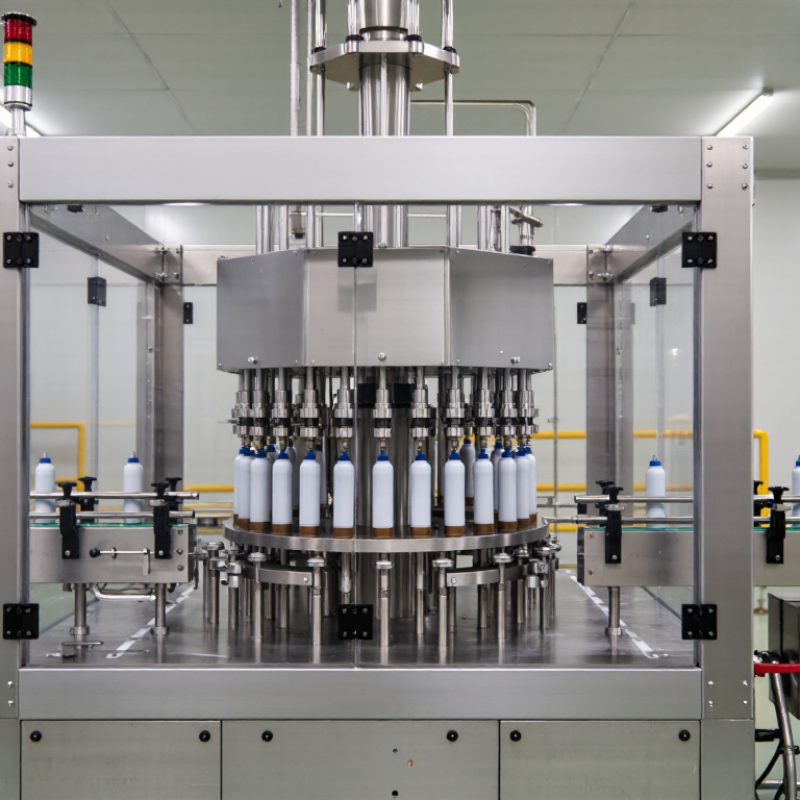
An automatic BOV aerosol filling machine is a production system designed for bag-on-valve packaging. It keeps the formula separate from the propellant. The product sits inside a flexible inner bag. Compressed air or another approved propellant surrounds that bag within the can. This design helps reduce direct contact between the formula and the propellant.
During operation, containers move through several controlled stations. The machine places the bag and valve, doses the product, crimps the valve, and charges the propellant. Sensors check container position and filling volume. Pressure gauges monitor each charging cycle. A leak test may follow before labeling or case packing. Small deviations matter. A few grams of product can change spray performance.
Reliable equipment needs more than a fast filling rate. Operators should verify pump calibration, crimp depth, valve alignment, and clean product pathways. Different formulas may require different seals, temperatures, or dosing speeds. In practical commissioning, unstable air pressure often causes uneven output. That problem is easy to miss. It may look like a valve defect at first.
Automatic control improves repeatability, but it does not remove human responsibility. Regular sampling should measure weight, pressure, spray pattern, and leakage. Records also support traceability during maintenance or quality reviews. The system should include guards, emergency stops, and materials suited to the formula. A perfect setting rarely exists. Careful adjustment remains necessary when products, can sizes, or valves change.
| Data Dimension | Typical Technical Information | Why It Matters |
|---|---|---|
| Machine Type | Automatic bag-on-valve aerosol filling line | Designed to fill the product and propellant separately while keeping the formulation inside a sealed bag. |
| Operating Principle | Product is filled into the bag before or after valve crimping, followed by propellant charging through the valve. | The separated product and propellant system helps reduce direct contact between the formulation and the propellant. |
| Typical Production Speed | Approximately 30–120 containers per minute, depending on container size, product viscosity, and line configuration. | Production speed is a key factor when matching the equipment to required daily output. |
| Suitable Container Sizes | Commonly configured for aerosol cans from approximately 35 ml to 1,000 ml. | Container-size flexibility allows one filling line to support multiple product formats. |
| Product Viscosity Range | Suitable for liquids, lotions, gels, creams, foams, and other formulations; the practical range depends on the pump and filling system. | Viscosity affects filling accuracy, transfer stability, and the required pump design. |
| Product Filling Accuracy | Often specified at approximately ±1% under stable operating conditions, subject to product properties and calibration. | Accurate filling reduces product waste and helps maintain consistent net content. |
| Propellant Filling Method | Pressure-based propellant charging through the aerosol valve; compatible systems may use compressed air, nitrogen, or liquefied propellant. | The charging method determines filling control, safety requirements, and compatibility with the formulation. |
| Valve Crimping | Automatic valve placement and crimping with adjustable crimp diameter and crimp depth. | Correct crimping is essential for leak prevention and reliable product dispensing. |
| Bag-on-Valve Compatibility | Supports aerosol containers fitted with bag-on-valve assemblies, subject to valve dimensions and container specifications. | Compatibility must be confirmed before production because valve geometry varies by application. |
| Filling Stations | Typical stations include container feeding, product filling, valve placement, crimping, propellant filling, leak testing, and discharge. | Integrated stations reduce manual handling and improve process repeatability. |
| Leak Testing | May include water-bath testing, pressure decay testing, or other approved in-line leak detection methods. | Leak testing helps identify defective valves, crimps, containers, or seals before packaging. |
| Compressed Air Requirement | Commonly requires clean, dry compressed air at approximately 0.6–0.8 MPa, depending on the machine design. | Stable air pressure is necessary for pneumatic actuators, valves, and consistent filling performance. |
| Electrical Supply | Usually available in common industrial configurations such as 220–240 V or 380–415 V, with single-phase or three-phase options. | The required power supply should be confirmed according to the installation location and machine configuration. |
| Control System | PLC-based control with a touchscreen interface, recipe storage, alarm monitoring, and parameter adjustment. | Digital controls simplify changeovers, troubleshooting, and production record management. |
| Material of Product-Contact Parts | Commonly stainless steel, with 304 or 316L selected according to formulation chemistry and hygiene requirements. | Appropriate materials improve corrosion resistance, cleanability, and product compatibility. |
| Changeover Requirements | Changeover may involve replacing guides, filling nozzles, star wheels, crimping components, and control parameters. | Quick-change components reduce downtime when producing different container sizes or formulations. |
| Safety Features | Typical features include guards, emergency stops, door interlocks, pressure monitoring, overload protection, and fault alarms. | Safety systems help protect operators and control risks associated with pressurized containers and propellants. |
| Automation Level | Automatic feeding, filling, crimping, propellant charging, inspection, and container discharge can be integrated into one line. | Higher automation can reduce labor requirements and improve production consistency. |
| Common Applications | Medical sprays, wound-care products, personal-care formulations, household products, food products, and industrial liquids. | The sealed BOV format is useful where product purity, controlled dispensing, or reduced propellant contact is required. |
| Key Selection Criteria | Required output, formulation viscosity, container dimensions, valve type, propellant type, filling accuracy, cleaning method, and safety standards. | Evaluating these factors helps ensure that the automatic filling machine matches the complete production process. |