Top 10 Benefits of Fiber Optic Technology You Need to Know
In today’s fast-paced digital world, the demand for high-speed connectivity and efficient communication solutions is more critical than ever. Fiber optic technology has emerged as a groundbreaking advancement that revolutionizes the way data is transmitted and received. By utilizing thin strands of glass or plastic fibers to transmit light signals, fiber optic systems offer unparalleled speed and reliability compared to traditional copper cables. This technology not only enhances internet speeds but also provides improved bandwidth capabilities and reduced signal degradation over long distances.
As we delve into the top 10 benefits of fiber optic technology, it becomes clear that its impact extends across various sectors, including telecommunications, healthcare, and education. The incredible speed, durability, and efficiency of fiber optic networks contribute significantly to meeting the increasing consumer expectations for seamless connectivity. Furthermore, fiber optic technology is highly resistant to electromagnetic interference, ensuring a stable connection even in challenging environments. Join us as we explore the myriad advantages of fiber optic technology, shedding light on why it is becoming the preferred choice for modern communication needs.

Overview of Fiber Optic Technology and Its Principles
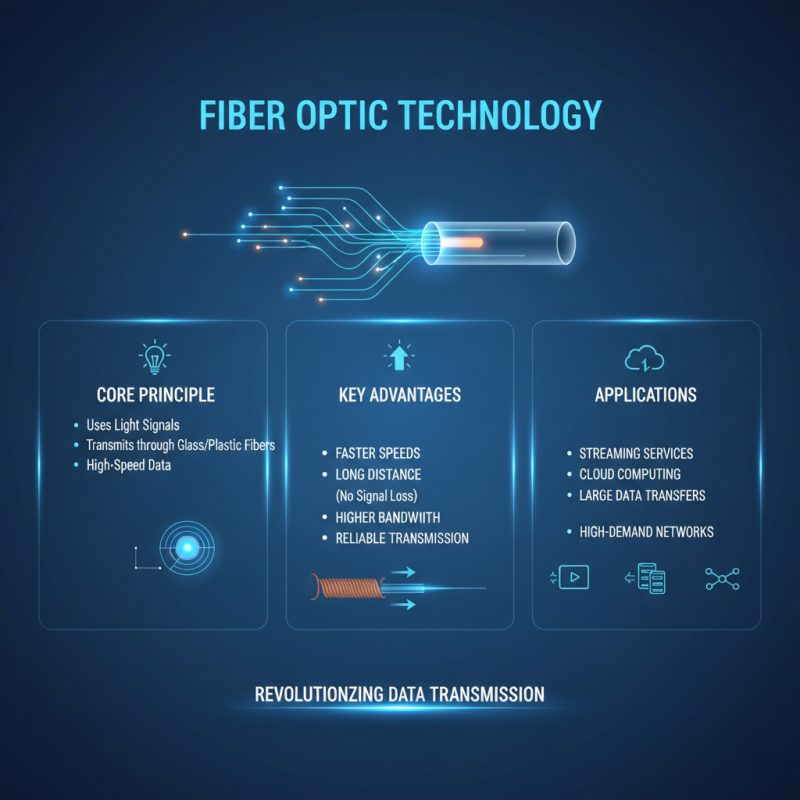
Fiber optic technology involves the transmission of data as light signals through thin strands of glass or plastic, known as optical fibers. This technology is based on the principle of total internal reflection, which allows light to travel long distances with minimal loss of signal quality. As the light signals reflect within the core of the fiber, they can carry vast amounts of information quickly and efficiently. This contrasts sharply with traditional copper cables, which are limited by resistance and electromagnetic interference.
One of the fundamental principles of fiber optics is the construction of the optical fiber itself, which consists of a core surrounded by cladding with a lower refractive index. This design enables light to bend and remain confined to the core, ensuring that data can traverse through the fiber without significant attenuation.
The benefits of this technology are numerous, including higher bandwidth capabilities, enhanced security, and immunity to electromagnetic interference, making fiber optics a preferred choice for modern communication systems. Additionally, fiber optic cables are lighter and more durable than traditional materials, allowing for greater flexibility in installation and a reduced environmental footprint.
Enhanced Data Transmission Speeds with Fiber Optics
Fiber optic technology has revolutionized the way we transmit data, significantly enhancing speeds beyond what traditional copper wiring can achieve. At the core of this advancement is the use of light signals to carry data through thin strands of glass or plastic fibers. These fibers allow for vast amounts of information to be transmitted simultaneously, making them ideal for high-demand applications such as streaming services, large data transfers, and cloud computing. Unlike electrical signals, which can degrade over distances, light can travel long distances without any loss, resulting in a more reliable and efficient transmission.
Furthermore, fiber optics not only provide faster data transmission but also offer increased bandwidth. This is essential in today’s data-driven world, where high-speed internet is a necessity for both businesses and personal use. With the capability of transmitting data at speeds many times faster than traditional methods, fiber optic connections enable seamless communication and improve overall user experience. As more organizations adopt this technology, the standard for what constitutes “fast” internet is rapidly evolving, pushing the boundaries of digital capabilities and supporting an increasingly connected society.
Improved Signal Quality and Reduced Interference
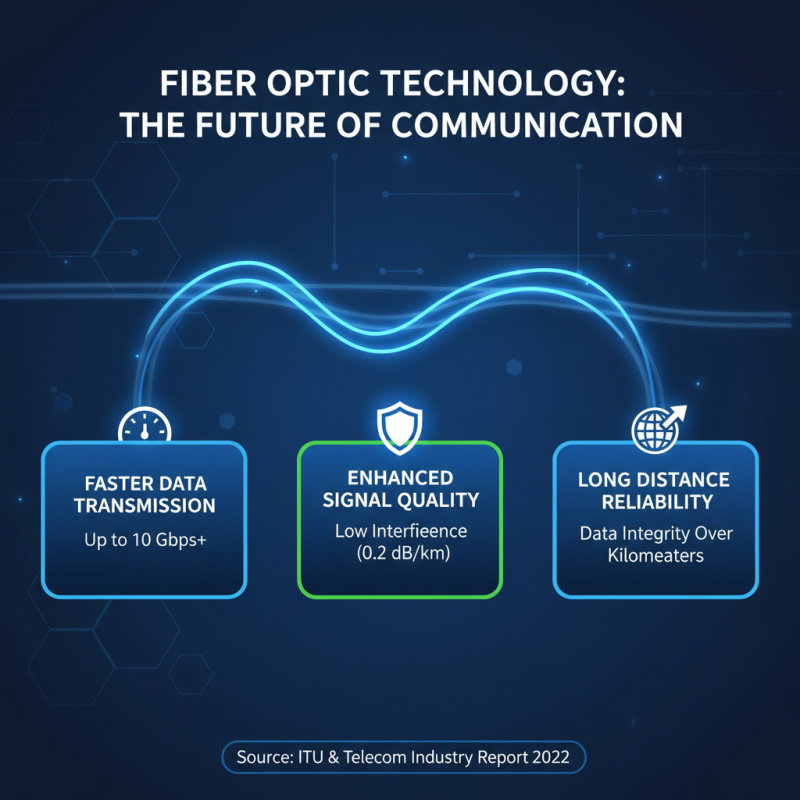
Fiber optic technology has revolutionized communication infrastructures by significantly enhancing signal quality and minimizing interference. According to a report by the International Telecommunication Union (ITU), fiber optics can transmit data over long distances without degradation, maintaining signal integrity even at high bandwidths. This is primarily due to the low attenuation rate of fiber, which is approximately 0.2 dB/km for single-mode fibers, as reported in the "State of the Telecom Industry" 2022 report. This enables organizations to achieve faster and more reliable data transmission, essential for today's data-driven world.
Moreover, fiber optic systems are inherently less susceptible to Electromagnetic Interference (EMI). Traditional copper cables are vulnerable to environmental factors that can disrupt signal transmission. In contrast, fiber optics, which rely on light instead of electrical signals, are immune to such interference. Research published by the Fiber Optic Association indicates that fiber optic networks can reduce noise levels significantly, providing clearer and more robust communication channels. This improved signal quality is particularly critical for applications that require steady and high-speed connections, such as video conferencing and online gaming, as it enhances user experience and operational efficiency across various platforms.
Cost Efficiency and Long-Term Savings of Fiber Optics
Fiber optic technology has rapidly gained traction in various industries, primarily due to its impressive cost efficiency and long-term savings. According to a report by the International Telecommunication Union (ITU), businesses can reduce operational costs by up to 30% by transitioning from traditional copper cabling to fiber optics. This is largely because fiber optics require significantly less maintenance and exhibit enhanced durability that leads to lower failure rates. Additionally, the lifespan of fiber optic cables can extend up to 25 years, much longer than typical copper wires, which often need replacement after 10 years, resulting in substantial savings over time.
Moreover, the energy efficiency of fiber optics contributes to cost-effectiveness. The U.S. Department of Energy reported that fiber optic networks consume 25% less energy compared to copper networks when delivering the same bandwidth. This reduction not only translates to lower utility bills but also aligns with sustainability goals, yielding a dual benefit of savings while promoting eco-friendly practices. With increasing demands for high-speed internet and data transmission, the initial investment in fiber optic infrastructure can ultimately lead to exponential cost savings while enhancing performance, making it a savvy choice for both large-scale enterprises and small businesses alike.
Top 10 Benefits of Fiber Optic Technology You Need to Know
| Benefit |
Description |
Cost Efficiency |
Long-Term Savings |
| High Bandwidth |
Fiber optics offer significantly higher bandwidth than traditional copper cables, allowing faster data transmission. |
Reduces the need for expensive upgrades. |
Long term investment in high-capacity infrastructure. |
| Low Latency |
Fiber optic networks provide lower latency, improving the performance of applications requiring rapid response times. |
Minimizes costs in data processing downtime. |
Saves costs linked to delays in service delivery. |
| Improved Signal Quality |
Fibers transmit data over longer distances without degradation. |
Reduces the frequency of equipment replacement. |
Longer-lasting installations save on maintenance. |
| Enhanced Security |
Fiber optics are difficult to tap into, providing enhanced security for data transmission. |
Prevents potential losses from data breaches. |
Lowers costs associated with data loss and recovery. |
| Durability |
Fiber optics are more resistant to environmental factors than copper cables. |
Reduces replacement costs due to weather damage. |
Lower spending on repairs and replacements over time. |
| Scalability |
Easily scalable by adding more fibers to the existing infrastructure. |
Minimizes the costs of network expansion. |
Saves money in future upgrades and scalability issues. |
| Future-Proof Technology |
Adapts to future technologies without the need for complete infrastructure updates. |
Reduces the costs associated with major upgrades. |
Long-term savings on technology investments. |
| Lower Energy Consumption |
Fiber optics consume less power than copper cables during data transmission. |
Decreases electricity bills for network operations. |
Saves money on energy costs long-term. |
| Reduced Interference |
Fiber optics are immune to electromagnetic interference, ensuring clear signals. |
Lessens the need for additional filtering equipment. |
Lower costs in equipment and performance issues. |
| Cost-Effective Over Time |
While installation costs may be higher, the overall cost-effectiveness increases with longevity and reduced maintenance. |
Initial investment leads to savings in ongoing expenses. |
Significant long-term cost reductions through enhanced efficiency. |
Environmental Benefits and Sustainability Aspects of Fiber Optic Technology
Fiber optic technology offers significant environmental benefits, making it a sustainable choice for modern communication infrastructures. Unlike traditional copper cables, fiber optics require less energy for data transmission due to their higher efficiency and lower signal degradation over long distances. This reduction in energy consumption not only lowers operational costs but also decreases the carbon footprint associated with running communication networks.
Moreover, fiber optic systems are made from glass, which is a recyclable material. This means that once the technology reaches the end of its life cycle, the components can be repurposed or recycled, minimizing waste. The longevity of fiber optic cables—often lasting over 25 years—further enhances sustainability, as fewer replacements mean reduced resource consumption.
Tips: When considering fiber optic installation, prioritize local suppliers who follow eco-friendly practices and focus on the efficient design of your network to maximize energy savings. Regular maintenance of fiber optic systems can also prolong their lifespan and improve reliability, leading to more sustainable usage. By adopting these practices, businesses can contribute positively to environmental efforts while enjoying the advanced benefits of fiber optic technology.