Engineer's Toolbox Visit www.hansarobotics.com
Category Banner

Top 10 Air Valve Types for Global Buyers?

Choosing the right Air Valve can determine whether a pipeline runs quietly or suffers from pressure surges, vibration, and avoidable downtime. Global buyers often compare price first, yet operating pressure, fluid temperature, pipe diameter, installation height, and maintenance access matter more. A valve that performs well on a municipal water line may fail in irrigation, wastewater, mining, or industrial process service.

Hydraulic engineering authority Dr. M. Hanif Chaudhry offers a useful principle: “Air is not a minor detail; it changes how water moves and pressure behaves.” This idea guides our review of the top 10 Air Valve types for international purchasing decisions. The list covers air release valves, air and vacuum valves, combination valves, kinetic valves, automatic valves, vacuum breakers, and specialized designs. Each type solves a different problem. Some remove trapped air during normal operation. Others protect pipelines during draining or sudden pressure loss. A few support clean, controlled service in demanding facilities.

Real-world selection is rarely perfect. Catalog descriptions can sound clearer than field conditions actually are. A buyer may choose the correct valve type but overlook flange standards, coating quality, seal compatibility, or spare-part availability. That mistake can become expensive beside a muddy pump station or a remote pipeline. We will compare working principles, strengths, limitations, materials, pressure classes, and typical applications. Manufacturer testing, installation guidance, and independent engineering review should support the final decision. Even experienced teams sometimes revise their choice after examining the complete system.
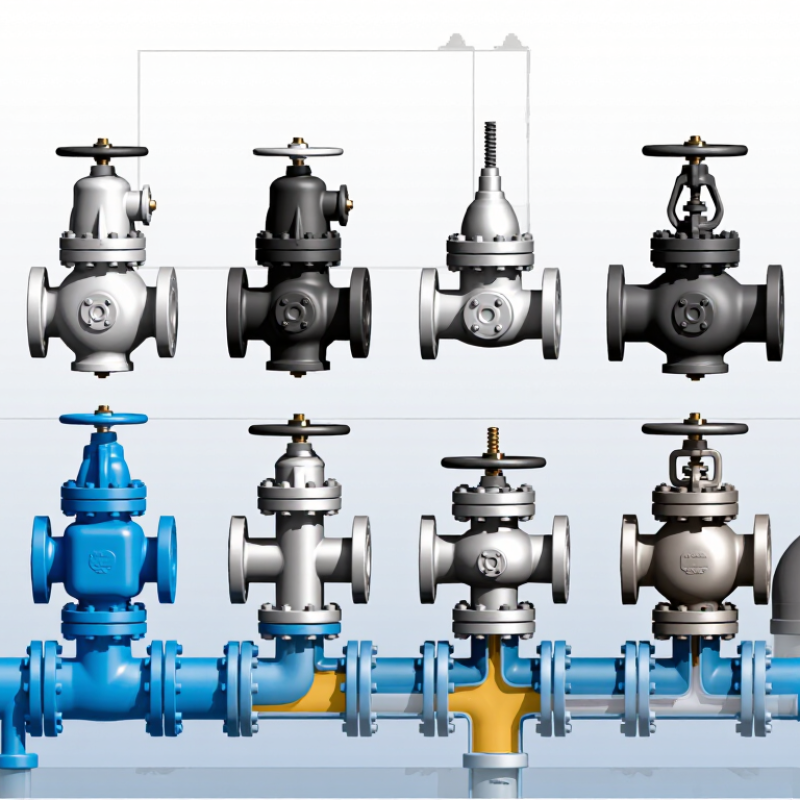
Top 10 Air Valve Types for Global Buyers?

How Air Valves Work and Why They Matter in Fluid Systems

Top 10 Air Valve Types for Global Buyers

Air valves manage trapped and moving air inside fluid systems. In water pipelines, air collects at high points and can restrict flow. During filling, air-release valves discharge air gradually. During draining, air-vacuum valves prevent damaging negative pressure. Combination valves perform both functions. Common designs include air-release, air-vacuum, combination, kinetic, single-orifice, double-orifice, sewage-rated, wastewater, vacuum-breaker, and manual vent valves. These categories overlap. That is a weakness. Buyers should compare operating functions, not labels.

Field sizing needs more than pipe diameter. Engineers check flow rate, pressure range, fluid temperature, elevation, surge risk, and discharge conditions. A small valve may vent air too slowly during filling. An oversized valve may close violently. Stainless internals, screened exhausts, and accessible isolation valves matter near muddy valve chambers. The U.S. Department of Energy’s Improving Compressed Air System Performance guide reports that compressed air can represent about 10% of industrial electricity use. A leaking or poorly controlled valve wastes more than air. It can also disturb actuator response and production stability.

Water networks face similar pressure. The World Bank’s The Challenge of Reducing Non-Revenue Water estimated global losses near 32 billion cubic metres annually. Air valves cannot solve leakage alone. Correct placement can reduce air locking, vacuum damage, and surge exposure. The practical lesson is uncomfortable: selection tables are useful, but incomplete. I would verify every calculation against site data, maintenance access, and transient analysis. That step is often skipped.

Top 10 Air Valve Types for Global Buyers

How air valves work and why they matter in fluid systems

Air valves release trapped air, admit air during pipeline drainage, and prevent vacuum formation. The chart compares representative pressure ratings commonly used in industrial water, process, and utility systems. Actual ratings vary by material, temperature, connection standard, and design; values are aligned with commonly used PN and ASME pressure classes.

The Main Categories of Air Valves Explained

Top 10 Air Valve Types for Global Buyers?

The Main Categories of Air Valves Explained

Air valves manage pressure, flow, direction, and trapped air in industrial systems. The main categories include solenoid, pneumatic control, check, relief, needle, ball, butterfly, diaphragm, angle-seat, and air-release valves. Each type serves a different operating condition. Solenoid valves use electrical signals for quick automation. Pneumatic control valves adjust airflow with compressed air. Check valves stop reverse flow. Relief valves protect equipment from excessive pressure.

Needle valves provide fine adjustment during testing or calibration. Ball valves offer fast isolation with a quarter-turn handle. Butterfly valves suit larger pipelines and lighter installation requirements. Diaphragm valves separate the medium from moving parts, helping with clean or sensitive applications. Angle-seat valves handle frequent cycling and demanding flow control. Air-release valves remove trapped air from liquid pipelines, reducing noise and unstable flow.

Selection requires more than matching pipe size. Check working pressure, temperature, media quality, connection standards, seal material, actuation method, and maintenance access. A valve rated for clean dry air may perform poorly with moisture or oil. Small details matter. In procurement reviews, buyers should request flow data, test records, material certificates, and clear installation instructions. A neat category list can still mislead. Real systems have pressure surges, vibration, and imperfect maintenance. Leave room for those conditions when comparing suppliers.

Top 10 Air Valve Types for Global Buyers

Top 10 Air Valve Types for Global Buyers

Global buyers should compare air valves by operating duty, not by catalog labels alone. The ten commonly specified types include air-release, air/vacuum, combination, kinetic, automatic, manual, pneumatic, electric-actuated, check, and surge-anticipating valves. These categories can overlap. That is where procurement mistakes begin.

Air-release valves remove small trapped-air pockets during normal operation. Air/vacuum valves admit large air volumes during pipeline filling or draining. Combination valves perform both functions. Kinetic models suit rapid air movement, while automatic units support continuous release. Manual valves remain practical for inspection points. Pneumatic and electric-actuated designs improve remote control. Check valves limit reverse flow. Surge-anticipating valves require careful hydraulic analysis.

The 2024 WHO and UNICEF Joint Monitoring Programme reported that 2.2 billion people lacked safely managed drinking water in 2022. Reliable pipeline hardware therefore has direct service consequences.

MarketsandMarkets identifies water and wastewater as major air-valve applications and forecasts continued market growth through 2028.

Buyers should verify pressure class, body material, temperature range, discharge capacity, and flange standards. ISO 5208 testing and EN 1074-4 guidance can support more consistent evaluation.

Field experience also matters. A valve that performs well on a clean, short pipeline may struggle with sediment, fluctuating pressure, or corrosive water. No universal “best” type exists. Even experienced teams sometimes oversize valves, creating unstable operation and unnecessary cost.

A documented air-release study is safer than a quick catalog choice.

How to Compare Air Valve Performance and Applications

Top 10 Air Valve Types for Global Buyers

Comparing air valve performance starts with the medium, pressure, temperature, and required response time. Ball valves offer quick shutoff and low resistance. Butterfly valves suit larger pipes and lighter assemblies. Gate valves work well for isolation, not frequent throttling. Globe valves provide better flow control but create higher pressure loss. Check valves prevent reverse flow. Needle valves deliver precise adjustment at low flow rates. Solenoid valves support fast automatic switching. Diaphragm valves handle sensitive or contaminated media. Safety valves protect systems from excessive pressure. Pneumatic control valves adjust flow continuously through an actuator.

Application changes the ranking. A compact solenoid valve may fit packaging equipment, while a robust butterfly valve may serve cooling-water lines. Check the valve’s Cv or flow coefficient, leakage class, actuation force, and response time. Confirm body and seal materials against moisture, oil, chemicals, and temperature. Threaded connections simplify maintenance. Flanged connections suit larger systems and repeated service.

Field experience shows that catalog pressure ratings can mislead without real operating conditions. A valve tested with clean, dry air may behave differently in a humid workshop. I once treated response speed as the main priority; energy use later became the bigger cost. That mistake was avoidable. Review pressure-drop curves, cycle testing, spare-part access, and installation orientation. Test a sample under actual load when failure would stop production. A tidy comparison table helps, but it cannot replace measured operating data.

Top 10 Air Valve Types for Global Buyers? - How to Compare Air Valve Performance and Applications
No. Valve Type Operating Principle Performance Profile Control and Actuation Typical Air, Gas, Fluid, or Process Applications Key Advantages Main Limitations
1 Ball Valve A drilled ball rotates 90 degrees to open or close the flow path. Very low pressure loss when fully open Fast shutoff Excellent isolation Manual lever, electric actuator, or pneumatic actuator; commonly used for on/off service. Compressed-air distribution, natural gas, process air, water, vacuum, and general industrial isolation. Compact design, reliable bubble-tight shutoff when properly selected, and simple quarter-turn operation. Standard full-port designs are not ideal for continuous throttling; soft seats may be affected by high temperature or abrasive media.
2 Butterfly Valve A circular disc rotates around a stem positioned across the pipe. Low to moderate pressure loss Fast operation Lightweight Manual handle or gearbox, electric actuator, or pneumatic actuator; suitable for isolation and moderate throttling. Large-diameter air ducts, ventilation systems, cooling water, water treatment, low-pressure gas, and industrial utilities. Low weight, short face-to-face length, economical installation, and efficient automation. The disc remains in the flow path; pressure drop and control accuracy can be less favorable than with a full-port ball valve.
3 Globe Valve A movable plug or disc travels toward or away from a stationary seat. Strong throttling capability Moderate to high pressure loss Good regulation Handwheel, electric actuator, or pneumatic actuator; well suited to modulating control. Pressure control, flow regulation, steam, compressed air, cooling systems, and process lines requiring frequent adjustment. Good control precision, predictable flow characteristics, and robust shutoff performance. Higher pressure drop, larger size, and more energy loss than low-resistance quarter-turn valves.
4 Gate Valve A gate or wedge moves vertically away from the flow path to create a nearly unobstructed opening. Very low pressure loss when open Slow operation Isolation focused Handwheel, electric actuator, or hydraulic actuator; normally operated fully open or fully closed. Large pipelines, air and gas headers, water utilities, process plants, and systems requiring infrequent isolation. Low resistance in the fully open position and suitability for large line sizes. Poor choice for throttling; slow travel, heavier construction, and possible seat or gate damage from vibration or partial opening.
5 Check Valve A disc, ball, piston, or dual plate opens with forward flow and closes when flow reverses. Automatic operation Low to moderate pressure loss Backflow protection No external actuator is normally required; selection should consider cracking pressure and closing speed. Compressor discharge lines, air receivers, pump systems, gas pipelines, pneumatic equipment, and parallel-flow systems. Protects equipment from reverse flow and prevents pressure loss between connected sections. Can chatter or cause water hammer if incorrectly sized; cannot be used for positive manual isolation.
6 Needle Valve A tapered needle moves into a small seat opening to provide fine flow adjustment. Excellent fine control High pressure loss Low flow capacity Usually manual; can be integrated with actuators for precise low-flow regulation. Instrument air, calibration systems, pneumatic controls, sampling lines, laboratory equipment, and pressure-gauge isolation. Accurate low-flow adjustment and good repeatability for instrument service. Not suitable for large flow rates, rapid isolation, or dirty media that can damage the fine seat and stem.
7 Plug Valve A cylindrical or conical plug rotates inside the valve body to align or block the flow passage. Low pressure loss when open Fast quarter-turn action Good isolation Manual lever or gearbox, electric actuator, or pneumatic actuator; mainly used for on/off service. Gas distribution, fuel systems, abrasive or dirty process service, chemical lines, and industrial air isolation. Simple flow path, compact operation, and availability of lubricated or sleeved designs for demanding service. Operating torque can be high; lubrication, seat compatibility, and maintenance requirements vary by design.
8 Diaphragm Valve A flexible diaphragm moves against a weir or seat and separates the actuator mechanism from the medium. Good contamination resistance Moderate pressure loss Good shutoff Manual handwheel, pneumatic actuator, or electric actuator; available for on/off and control duties. Corrosive gases, clean air, chemical processing, pharmaceutical utilities, water treatment, and slurry-related services. Minimal leakage around the stem, isolated internal mechanism, and suitability for corrosive or hygienic media. Diaphragm life is affected by temperature, pressure, cycling, and chemical compatibility; flow capacity may be limited.
9 Solenoid Valve An electromagnetic coil moves a plunger or pilot mechanism to open or close the valve. Fast response Repeatable switching Low to moderate flow capacity Electrical signal, commonly configured as normally closed or normally open; direct-acting and pilot-operated versions are available. Pneumatic cylinders, automated machinery, air preparation units, safety interlocks, irrigation controls, and process automation. Compact automation, rapid response, remote control, and easy integration with control systems. Requires suitable electrical power and coil protection; pilot-operated models need adequate differential pressure and clean medium.
10 Air Release and Vacuum Valve A float or rolling mechanism automatically releases trapped air and admits air when a liquid pipeline develops negative pressure. Air management function Protects pipeline integrity Low normal-flow resistance Normally automatic; isolation valves are often installed below the unit for maintenance. Water transmission mains, irrigation systems, pumping stations, wastewater pipelines, and liquid systems with air-pocket or vacuum risks. Reduces air locking, helps limit vacuum damage, and supports stable hydraulic performance. Primarily intended for liquid pipelines rather than general compressed-air distribution; sizing and installation position are critical.
Buyer comparison note: Select the valve by medium, pressure, temperature, pipe size, required flow coefficient, leakage class, cycling frequency, actuator type, connection standard, and maintenance conditions. Performance values are typical design characteristics; the final selection should always be verified against the manufacturer’s technical datasheet and applicable standards.

Key Buying Factors for International Air Valve Sourcing

International air valve sourcing requires more than comparing catalog prices. Buyers should match the valve type to the operating task. Ball and butterfly valves suit fast isolation. Globe and needle valves support controlled flow. Check valves prevent reverse movement. Gate valves work best when pressure loss must remain low. Solenoid, pneumatic, safety, and air-release valves serve more specialized systems.

Start with the medium, pressure range, temperature, and required flow rate. A valve used with compressed air may fail quickly in a corrosive or wet environment. Stainless steel, brass, and engineered polymers each have practical limits. Review seal compatibility carefully. A small mismatch can cause leakage, downtime, or early replacement.

Connection standards deserve equal attention. Confirm thread form, flange dimensions, actuator signals, and installation space before ordering. Ask suppliers for pressure tests, material records, inspection reports, and traceable serial information. Independent testing can strengthen confidence for critical applications. It also exposes vague claims.

Logistics can change the real purchase cost. Check lead times, packaging, spare seals, customs documents, and technical support across time zones. A low unit price may hide expensive delays. I have seen projects select the cheapest valve, then struggle with incompatible actuators. That mistake is avoidable.

Use a sample or pilot order when specifications remain uncertain. Test response time, shutoff performance, noise, and maintenance access. Do not trust a perfect spreadsheet alone. Field conditions are rarely perfect. Reliable sourcing combines engineering review, supplier evidence, and practical installation feedback.

Article Source: