Choosing a reliable actuator motor manufacturer is rarely as simple as comparing catalog prices. Global buyers must examine torque, speed, duty cycle, noise, thermal performance, and control compatibility. A motor that performs well on a test bench may struggle inside a dusty packaging line or a compact medical device.
Dr. Kevin Craig, a respected mechatronics educator, has described an actuator as “the muscle of a mechatronic system.” That image matters. The actuator motor converts electrical commands into physical movement, often thousands of times each day. Its quality affects positioning accuracy, energy use, maintenance schedules, and product safety.
This guide reviews leading actuator motor manufacturers serving international markets. It considers engineering capability, production consistency, customization, certifications, technical support, and delivery reliability. Buyers should also inspect warranty terms, replacement-part access, and communication during commissioning. Small details matter. A delayed encoder can stop an entire assembly cell.
Not every major brand fits every application. Some manufacturers excel in miniature motors, while others focus on heavy-duty industrial systems. A lower price can also hide higher integration costs. That risk deserves attention.
Real-world selection is imperfect. Public specifications may omit vibration behavior, long-term backlash, or performance at low temperatures. Buyers should request samples, test actual loads, and verify claims with documented data. Factory visits can help, but they do not replace independent testing.
The goal is not to name one universal winner. It is to identify manufacturers that match the application, operating environment, and support expectations of each global buyer.
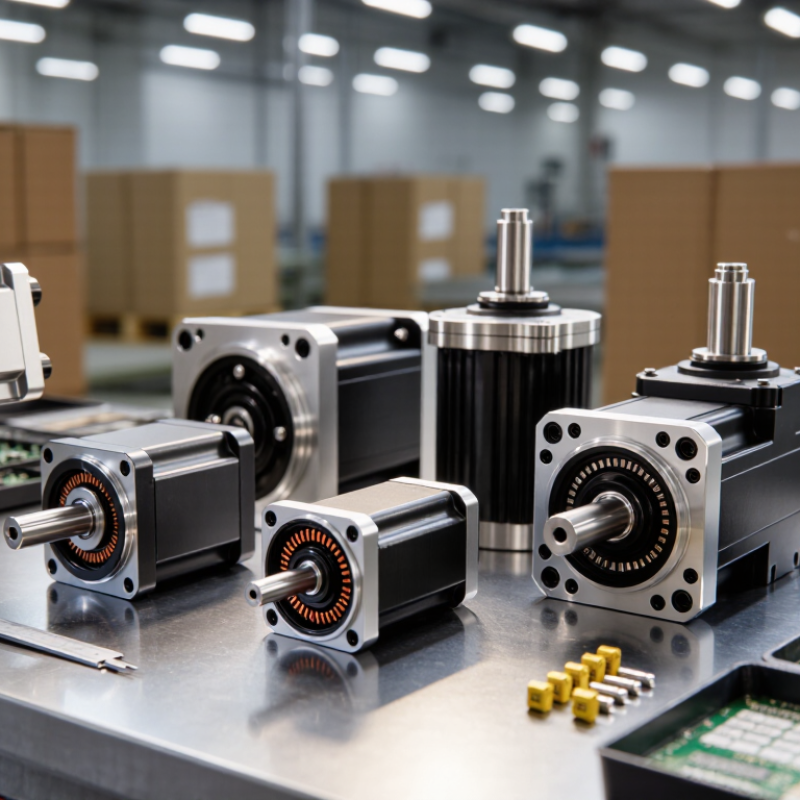
An actuator motor converts electrical energy into controlled mechanical movement. Unlike a basic spinning motor, it moves, stops, or holds a load at a chosen position. This movement may be linear or rotational. Common applications include valves, adjustable seats, robotic joints, dampers, and automated production equipment.
Inside the unit, an electric motor creates torque through magnetic fields. Gears can increase torque while reducing output speed. A lead screw changes rotation into linear travel. Sensors then report position, speed, or load to a controller.
The controller compares this feedback with the target command and adjusts power. This closed-loop process improves accuracy, especially when the load changes suddenly. Some actuators use simple limit switches instead. They cost less, but position control is less precise.
Selection requires more than checking rated force. Measure the real load, travel distance, duty cycle, speed, mounting space, and operating temperature. A motor that works well in a clean workshop may struggle near dust, moisture, or vibration.
In practical evaluations, heat buildup often receives too little attention. It can shorten service life. Noise and backlash also matter in precise equipment.
The simple explanation is useful, but incomplete. Motor sizing may still need testing under the worst expected load. A small safety margin helps, yet excessive oversizing can waste energy and increase system costs.
Ensure the controller, wiring, feedback device, and actuator communicate correctly before regular operation.
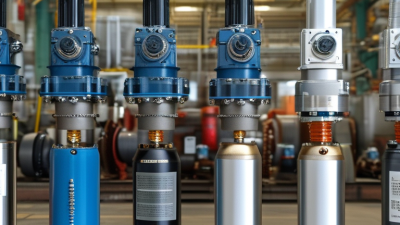
Global buyers are comparing actuator motors by motion, load, speed, and operating environment. Electric linear actuators provide controlled extension and retraction for valves, lifting columns, medical equipment, and factory tooling. Rotary electric actuators suit quarter-turn or continuous movement. They are compact, programmable, and easier to monitor than many traditional systems.
Hydraulic actuators remain useful where heavy force matters, such as construction machinery and large industrial presses.
Pneumatic actuators deliver quick movement and simple maintenance, but compressed-air losses can reduce system efficiency.
Piezoelectric actuators offer extremely precise movement, although their short stroke limits wider industrial use.
MarketsandMarkets estimates the global actuator market could grow from about USD 56 billion in 2022 to over USD 76 billion by 2027. The report identifies electric, hydraulic, and pneumatic systems as major categories.
A clean classification can still mislead. Real installations often combine technologies.
Tips: Match the actuator to the full duty cycle, not peak force alone.
Check stroke length, backlash, noise, ingress protection, temperature, and emergency positioning. In a dusty plant, a sealed electric actuator may outperform a cheaper pneumatic option. In a wet, high-load area, corrosion-resistant materials deserve greater attention.
Buyers should request test data under actual load conditions. Datasheets sometimes show ideal performance. That is not the factory floor.
Reliability also depends on controls, cabling, lubrication, and technician access. A small pilot installation can reveal heat buildup, vibration, or unexpected alignment errors before full deployment.
Top Actuator Motor Manufacturers for Global Buyers
How to Evaluate Actuator Motor Manufacturers
Choosing an actuator motor manufacturer requires more than comparing unit prices. Define the load, stroke length, operating speed, duty cycle, and installation space first. A supplier should explain how its motor performs under your actual working conditions. Ask for test data, not only catalog ratings. Ask for proof.
Check repeatability, backlash, noise, heat rise, and emergency stopping behavior. For outdoor equipment, inspect ingress protection results and corrosion-resistant materials. For medical or industrial systems, request traceability records and documented quality procedures. A reliable manufacturer can provide drawings, wiring details, sample reports, and clear tolerance limits.
Experience becomes visible during technical discussions. Strong engineers will ask about mounting orientation, vibration, cable routing, and control signals. They may also recommend a different gearbox or a slower speed for longer service life. That advice matters. However, supplier claims still need independent verification. Test samples through several cycles, measure current draw, and record position accuracy at different temperatures.
Review production capacity and lead-time consistency before signing a purchase agreement. A factory may deliver excellent prototypes yet struggle with large orders. Check how it handles rejected parts, design changes, replacement units, and after-sales communication. Small gaps often become expensive problems. I would also compare two samples from different production batches, because one successful unit proves very little. Reliability is demonstrated repeatedly, not promised once.
Top Actuator Motor Manufacturers for Global Buyers
Leading manufacturers differ by region, production scale, and application expertise. East Asian suppliers often excel in compact motors, high-volume production, and short customization cycles. Their products may suit robotics, office equipment, and automated assembly lines. European manufacturers commonly focus on precision control, energy efficiency, and documented quality systems. These strengths matter in medical equipment, laboratory automation, and factory machinery.
North American manufacturers often develop rugged actuator motors for industrial automation, mobile equipment, and building systems. They may provide stronger engineering support for complex integration. South Asian and Southeast Asian producers can offer competitive pricing for standard actuators, agricultural equipment, and HVAC applications. Regional strengths are useful indicators, not guarantees. A capable factory can still miss a delivery target.
Industry specialty should guide the shortlist. A robotics buyer needs low backlash, repeatable positioning, and thermal stability. An HVAC integrator may prioritize quiet operation, long service life, and simple installation. Medical applications require traceable testing and controlled production records. Buyers should request load curves, duty-cycle data, noise measurements, and sample inspection reports.
Ask for field references when possible. Review failure rates, repair procedures, and spare-part availability. Factory audits add practical evidence. Catalog figures sometimes look better than actual performance. That deserves scrutiny. Temperature, dust, vibration, and voltage changes can expose weaknesses that laboratory tests miss. A balanced supplier review combines regional capability with application-specific proof.
| Region | Common Manufacturing and Engineering Specialty | Typical Actuator Motor Types | Primary Industry Applications | Relevant Technical References | Key Buyer Evaluation Factors |
|---|---|---|---|---|---|
| East Asia | High-volume production, compact electromechanical assemblies, rapid customization, and cost-efficient integration of motors, gears, sensors, and control boards. | Permanent-magnet DC motors, brushless DC motors, stepper motors, geared motors, and small servo motors. | Consumer equipment, office automation, robotics, HVAC dampers, smart home devices, medical instruments, and light industrial automation. | IEC 60034 motor requirements, electromagnetic compatibility requirements, RoHS and REACH substance controls where applicable. | Unit cost, minimum order quantity, sample lead time, customization capability, production traceability, and export documentation. |
| Western and Central Europe | Energy-efficient motor design, precision motion control, safety engineering, low-noise operation, and highly documented industrial manufacturing. | Industrial servo motors, synchronous motors, brushless motors, geared actuators, and high-efficiency induction motors. | Factory automation, process control, packaging machinery, medical equipment, renewable-energy systems, valves, and material-handling equipment. | IEC 60034, IEC 61800 for adjustable-speed electrical power drive systems, CE-related conformity requirements, and applicable machinery safety rules. | Position accuracy, thermal performance, acoustic noise, functional safety, lifecycle cost, documentation quality, and service support. |
| North America | Industrial-duty motors, rugged actuator packages, engineered-to-order solutions, retrofit compatibility, and integration with established automation systems. | AC induction motors, permanent-magnet motors, servo motors, linear actuators, and heavy-duty geared motors. | Oil and gas equipment, water treatment, warehouse automation, industrial machinery, aerospace support systems, agricultural machinery, and building automation. | NEMA motor dimensions where applicable, applicable electrical safety requirements, IEC standards for exported equipment, and industrial control-system requirements. | Voltage and frequency compatibility, enclosure rating, duty cycle, repairability, local inventory, warranty terms, and field-service availability. |
| South Asia | Cost-sensitive industrial motor production, custom winding, power-conditioning solutions, agricultural equipment, and application-specific actuator assemblies. | Induction motors, single-phase motors, DC geared motors, servo motors, and hydraulic-electric hybrid actuator drives. | Textile machinery, pumps, agricultural equipment, elevators, machine tools, process equipment, and general-purpose factory automation. | IEC 60034, local electrical safety requirements, energy-efficiency classifications, and customer-specific inspection standards. | Price-to-performance ratio, winding quality, voltage tolerance, spare-parts availability, inspection procedures, and delivery reliability. |
| Southeast Asia | Electronics and electromechanical assembly, contract manufacturing, compact motor production, and supply-chain integration for international equipment makers. | Brushless DC motors, small AC motors, stepper motors, fan motors, geared motors, and compact linear actuators. | Electronics manufacturing equipment, cooling systems, appliances, automotive components, warehouse systems, and consumer products. | IEC 60034, electromagnetic compatibility testing, RoHS and REACH requirements where applicable, and customer quality-management procedures. | Export experience, component sourcing, humidity and corrosion protection, automated testing, production scalability, and quality consistency. |
| Japan and South Korea | Precision engineering, miniaturized motors, advanced feedback systems, quiet operation, high repeatability, and integrated mechatronic solutions. | Precision servo motors, stepper motors, brushless motors, direct-drive motors, and miniature geared actuators. | Semiconductor equipment, robotics, imaging systems, medical devices, automotive systems, precision assembly, and laboratory automation. | IEC 60034, IEC 61800, electromagnetic compatibility requirements, and application-specific safety and reliability testing. | Repeatability, backlash, encoder resolution, vibration, thermal stability, software compatibility, and long-term component availability. |
| Latin America | Industrial replacement motors, application-specific assemblies, agricultural and infrastructure equipment, and regional maintenance support. | AC induction motors, geared motors, DC motors, pump motors, and electromechanical valve actuators. | Mining, agriculture, water infrastructure, food processing, cement production, HVAC, and general industrial machinery. | IEC 60034, local electrical codes, enclosure and ingress-protection requirements, and customer maintenance specifications. | Resistance to dust and humidity, serviceability, replacement compatibility, regional distribution, operating-temperature range, and total ownership cost. |
| Middle East and Africa | Ruggedized motor systems, harsh-environment protection, pumping solutions, industrial maintenance, and engineered packages for infrastructure projects. | Heavy-duty induction motors, geared motors, valve actuators, pump motors, and explosion-protected motor assemblies where required. | Water and wastewater treatment, oil and gas, mining, desalination, power generation, HVAC, and large-scale infrastructure. | IEC 60034, ingress-protection classifications, hazardous-area requirements where applicable, corrosion-protection specifications, and project quality standards. | Ambient temperature, dust and sand protection, corrosion resistance, hazardous-area certification, commissioning support, and spare-parts logistics. |
Note: Regional categories describe commonly observed manufacturing and application strengths. Final compliance requirements depend on the destination market, equipment design, operating environment, and installation conditions.
Top Actuator Motor Manufacturers for Global Buyers
Global sourcing requires more than comparing motor prices. Buyers should verify torque, speed, duty cycle, noise, thermal protection, and expected service life. A compact actuator may look suitable, yet fail under repeated loads or high ambient temperatures. Request test reports, production samples, and traceability records before approving a supplier. Reliable manufacturers should explain their testing methods clearly.
Tips: Compare at least three suppliers. Audit quality controls when possible. Check whether samples match mass production. Ask for documented compliance with relevant IEC standards, EMC requirements, RoHS, REACH, and market-specific marking rules. Certificates alone are not enough. Their scope, issuing body, and product model must match.
Global buyers should also review export documents, packaging strength, lead times, warranty terms, and replacement-part support. Confirm the agreed Incoterm and responsibility for customs clearance. A supplier with local technical support can reduce downtime, especially when installation problems cross time zones. Factory capacity matters too. A small sample order may not reveal production bottlenecks. I have seen polished specifications hide weak feedback systems or inconsistent tolerances. That possibility deserves attention. Ask for lifecycle data, inspection records, and corrective-action examples. No supplier is perfect. The better choice is usually the one that admits limitations, measures them, and responds with evidence.