Engineer's Toolbox Visit www.hansarobotics.com
Category Banner

2026 Top Charging Station Manufacturers for Global Buyers

Choosing a Charging Station manufacturer in 2026 requires more than comparing connector counts or advertised charging speeds. Global buyers must examine hardware design, software stability, safety testing, and long-term service capability. A reliable supplier should explain thermal management, ingress protection, payment security, and remote diagnostics in clear language. It should also provide test records, warranty terms, spare-parts plans, and local technical support. These details matter beside a busy highway, where one failed charger can delay drivers and reduce operator revenue. The best choice is rarely the cheapest quote. Easy to forget.

This guide reviews leading Charging Station manufacturers for global buyers, focusing on practical deployment conditions. It considers AC wall boxes, DC fast chargers, fleet systems, and high-power charging sites. The discussion also weighs manufacturing scale, regional certifications, installation guidance, cybersecurity practices, and upgrade paths. Buyers in Europe, North America, Asia-Pacific, and emerging markets face different grid requirements and procurement expectations. A manufacturer experienced in one region may still struggle in another. That matters. We will focus on evidence rather than polished brochures or ambitious performance claims. Some rankings remain debatable because pricing, service quality, and delivery records can change quickly. Readers should verify current certifications, customer references, and field results before signing contracts. This caution is not hesitation; it is responsible purchasing. The goal is a dependable Charging Station network that performs safely, predictably, and economically over time.
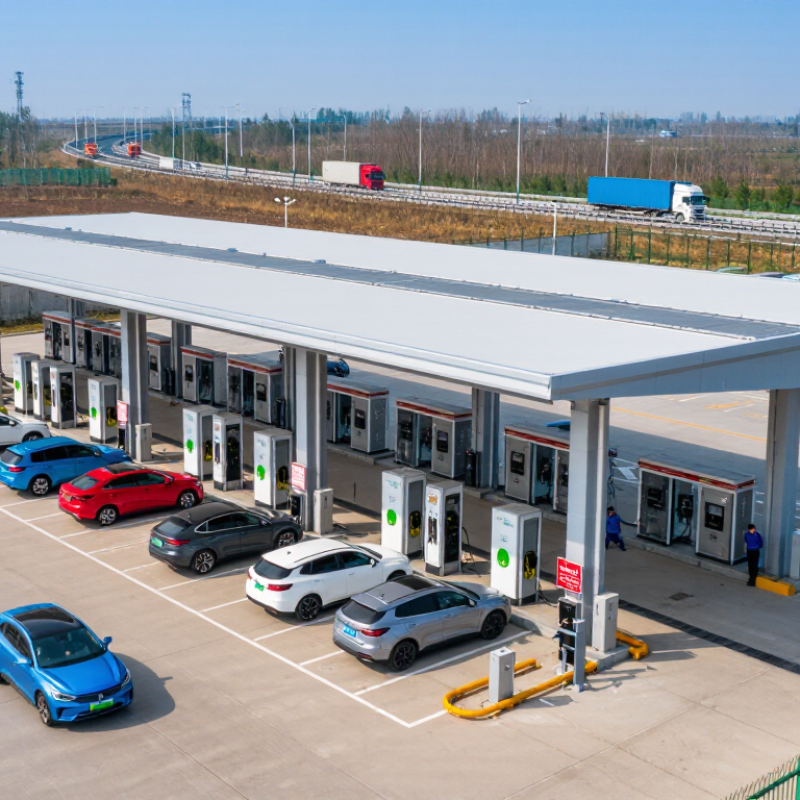
2026 Top Charging Station Manufacturers for Global Buyers

Global EV Charging Market Overview in 2026

In 2026, the global EV charging market is expanding across cities, highways, workplaces, and residential areas. Demand is no longer limited to private car owners. Electric taxis, delivery fleets, buses, and commercial vehicles also require dependable charging access. Urban sites often prioritize compact AC chargers and smart load management. Highway locations need faster DC charging, reliable cooling, and clear payment systems. Different sites require different solutions.

Global buyers are examining more than charging speed. Experienced project teams assess connector compatibility, operating temperatures, installation quality, software stability, and after-sales support. They also review uptime records, safety testing, spare-part availability, and local service capacity. A charger may perform well in a laboratory but struggle in desert heat, coastal humidity, or freezing weather. Field evidence matters. Forecasts remain imperfect.

Grid capacity is another major market factor. Some regions can support high-power charging, while others need staged deployment and energy management. In rural areas, limited electricity infrastructure may delay projects more than equipment costs. Buyers increasingly request remote monitoring, transparent data access, and cybersecurity controls. These tools help operators identify failed sessions, payment errors, and abnormal power demand.

Maintenance is often underestimated. A damaged cable, unstable network connection, or delayed replacement part can reduce customer trust quickly. Training for local technicians is equally important. The market is growing, but standards, installation practices, and service quality still vary between countries. Careful procurement requires technical audits, realistic site testing, and contracts that define measurable performance.

Key Criteria for Evaluating Charging Station Manufacturers

Key Criteria for Evaluating Charging Station Manufacturers

Global buyers need evidence, not impressive brochures. The International Energy Agency reported over four million public charging points worldwide in 2023, with stock rising by more than 40% that year. This growth increases pressure on equipment reliability, service capacity, and software compatibility. Ask manufacturers for independently verified uptime records, failure rates, and repair times. Request field data from climates similar to your installation site.

Electrical performance matters, but it is only one part of the decision. Review output stability, peak-load management, connector durability, thermal protection, and cybersecurity controls. The U.S. Department of Energy’s Alternative Fuels Data Center highlights network availability and charger location data as important factors for public charging access. A capable manufacturer should support open communication protocols, remote diagnostics, secure updates, and accurate energy measurement. Test these functions before signing a large contract.

Look beyond the cabinet.

Study warranty exclusions, spare-parts access, technician training, and local response times. Ask whether the manufacturer can document performance after heavy rain, dust exposure, and repeated daily charging. Certification helps, but certification alone does not prove dependable operation. IEA analysis also shows charging demand will expand sharply alongside electric vehicle adoption, making future software and power upgrades essential. No evaluation scorecard is perfect. Buyers should record test results, question vague claims, and leave room for uncomfortable findings.

Leading Charging Station Manufacturers for International Buyers

International buyers need more than a low unit price when selecting charging station manufacturers. Installation conditions, connector standards, payment systems, and service coverage can change the real project cost. Manufacturers with export experience should provide clear technical files, test reports, and traceable quality records. Ask for enclosure ratings, operating temperatures, cable specifications, and electrical protection functions. Small details matter.

Reliable manufacturers usually support several power levels and site types, including homes, offices, parking facilities, and highway locations. Their engineering teams should explain load management, network communication, and remote fault reporting in practical language. They should also identify which components are replaceable locally. This can reduce downtime when a cooling fan or control board fails. Local certification and grid requirements must be checked before purchase, not after shipment.

A serious supplier should offer sample testing, factory inspection, installation guidance, and written warranty terms. International buyers can request references from comparable climates and operating environments. A desert site needs different thermal planning than a cold urban garage. An attractive quotation may hide shipping, software, commissioning, or spare-parts costs. No manufacturer gets every detail right. That is why buyers should record assumptions and challenge unclear promises. Response time matters too. A technically strong factory with weak after-sales communication can still create expensive delays. Clear contracts, inspection checkpoints, and measurable service targets make cooperation more dependable.

2026 Top Charging Station Manufacturers for Global Buyers - Leading Charging Station Manufacturers for International Buyers
Manufacturer Capability Segment Typical Output Range Primary Application Electrical Input Vehicle-Side Charging Standard Communication Protocols Typical Protection Rating Operating Temperature Recommended Buyer Profile Common Compliance Requirements
Residential AC Wallbox 3.7–22 kW Private homes, apartment parking, villas and small residential developments Single-phase or three-phase AC; commonly 230 V or 400 V systems IEC 61851; IEC 62196-compatible AC connection OCPP 1.6J or proprietary local network control; Wi-Fi, Ethernet or cellular options Usually IP54–IP65; impact protection commonly IK08 or higher Approximately −30°C to +50°C Distributors, residential developers, electrical contractors and home-energy integrators Regional electrical safety, electromagnetic compatibility, residual-current protection and radio-equipment requirements
Commercial AC Charging Station 7–22 kW per charging point Offices, hotels, retail centers, workplaces, public car parks and mixed-use buildings Three-phase AC is commonly used for 11 kW and 22 kW installations IEC 61851 and IEC 62196; socketed or tethered configurations OCPP 1.6J or OCPP 2.0.1; Ethernet, Wi-Fi, 4G/5G or wired load-management systems Typically IP54–IP55; outdoor models may reach IP65 Approximately −30°C to +50°C Commercial property owners, charge-point operators and fleet facility managers Electrical installation codes, accessibility provisions, payment requirements and local grid-interconnection rules
Destination Charging Cabinet 2 × 7–22 kW or multiple AC outlets Hotels, resorts, hospitals, universities, residential complexes and long-stay parking Three-phase AC with integrated load balancing for multi-port operation IEC 61851; IEC 62196-compatible AC outlets OCPP 1.6J, OCPP 2.0.1, RFID, mobile application and backend connectivity Typically IP55–IP65; IK08–IK10 depending on enclosure design Approximately −25°C to +50°C International project buyers requiring simple installation and controlled site power demand Local construction regulations, electrical protection, payment security and data-privacy requirements
Compact DC Fast Charger 20–60 kW Urban public charging, convenience stores, workshops and small fleet depots Three-phase AC input; typically 380–415 V in many commercial installations IEC 61851-23 and IEC 62196-compatible DC connection OCPP 1.6J or OCPP 2.0.1; Ethernet, cellular, RFID and remote diagnostics Usually IP54–IP55; outdoor units commonly include IK08 protection Approximately −30°C to +50°C Retail operators, fuel-station conversions, municipalities and small mobility networks DC charging safety, electromagnetic compatibility, surge protection, metering and regional certification
Medium-Power DC Charger 60–180 kW High-turnover urban sites, highway service areas, dealerships and commercial fleets Three-phase AC input; site capacity commonly requires dedicated medium-voltage or high-capacity low-voltage planning IEC 61851-23; vehicle communication may use DIN 70121 or ISO 15118 OCPP 1.6J or OCPP 2.0.1; dynamic load management and remote monitoring Commonly IP54–IP55; IK08 or higher for public outdoor deployment Approximately −30°C to +50°C, with power derating at temperature extremes Charge-point operators, fleet companies, highway developers and public infrastructure buyers Grid-connection approval, DC safety, calibrated energy measurement, payment security and public-site accessibility
High-Power DC Charging System 180–480 kW per charging dispenser Motorway corridors, electric bus depots, logistics hubs and heavy-duty vehicle facilities High-capacity three-phase AC input; dedicated transformer and switchgear are often required IEC 61851-23; ISO 15118 support is increasingly specified for advanced vehicle communication OCPP 2.0.1, ISO 15118-related functions, cellular or fiber backhaul and energy-management integration Typically IP54–IP55 for power cabinets and outdoor dispensers Approximately −30°C to +50°C, subject to thermal derating and cooling design Highway operators, logistics companies, bus operators and large-scale infrastructure investors High-power electrical design, transformer capacity, fire protection, civil works, metering and network authorization
Fleet Depot Charging Platform 30–480 kW with multi-charger power sharing Delivery fleets, taxis, buses, rental fleets, municipal vehicles and logistics centers AC or DC architecture with centralized energy management and scheduled charging IEC 61851; IEC 61851-23 for DC systems; ISO 15118 where supported by the vehicle fleet OCPP 2.0.1, fleet-management APIs, automated load scheduling and depot energy-management systems Usually IP54–IP65 depending on indoor or outdoor equipment location Approximately −30°C to +50°C; cold-weather heating may be required Fleet operators seeking uptime guarantees, optimized energy costs and centralized operational control Fleet safety procedures, utility approval, demand-management rules, cybersecurity and local construction permits
Solar-Integrated Charging System 7–22 kW AC or 20–180 kW DC Commercial sites, renewable-energy parks, microgrids and off-grid or weak-grid locations Grid-connected, solar-assisted or battery-buffered electrical architecture IEC 61851 and IEC 62196; DC systems generally follow IEC 61851-23 OCPP, Modbus TCP/RTU, energy-management APIs and remote monitoring Typically IP55–IP65 for outdoor enclosures Approximately −25°C to +50°C, subject to solar inverter and battery specifications Energy developers, industrial sites, remote facilities and buyers pursuing lower peak-demand costs Photovoltaic and inverter standards, battery safety where applicable, grid synchronization and electrical protection
Public Smart-Charging Network Equipment 7–480 kW depending on site category Municipal networks, public parking, transport hubs and national charging programs AC or DC input with centralized network management and remote firmware administration IEC 61851; IEC 62196; ISO 15118 may be required for advanced smart-charging functions OCPP 2.0.1 preferred; secure cellular, Ethernet, RFID, mobile payment and remote diagnostics Typically IP55 or higher for exposed public installations Approximately −30°C to +50°C, with environmental testing based on deployment region Government agencies, charge-point operators, infrastructure funds and nationwide distributors Cybersecurity, accessibility, public metering, payment compliance, data protection and national type approval
Buyer note: The specifications shown are representative industry ranges for 2026 procurement planning rather than claims about any individual manufacturer. Final selection should be verified against local grid conditions, connector regulations, certification requirements, climate, payment rules, warranty terms and backend interoperability.

Charger Types, Standards, and Global Compatibility

For 2026 buyers, charging station selection starts with use conditions, not catalog claims. AC Level 2 suits homes, offices, and overnight parking. DC fast chargers serve highways and busy depots, but they demand stronger electrical capacity. High-power units can overload an unprepared site. That detail is often missed.

Connector standards also shape compatibility. CCS1 is common in North America, while CCS2 serves much of Europe and other markets. GB/T remains important in China, and CHAdeMO still appears in existing vehicle fleets. Some newer vehicles use NACS. An adapter may solve the plug problem, but not every communication or power limitation. Check voltage, frequency, phase balance, cable length, and local certification before ordering.

Tips: Request a sample unit or compatibility test. Test it with your actual vehicle, payment process, and network. Reliable manufacturers should publish test records, protection ratings, operating temperatures, and software support. Look for OCPP support when chargers must connect with different management platforms. ISO 15118 may enable smarter identification and future vehicle-to-grid functions, but availability varies. I would also confirm spare-part access and remote diagnostics. A neat specification sheet is not proof of easy deployment. Real sites are less forgiving.

Global EV Charging Standards: Representative Maximum Rated Power

The chart compares representative maximum rated power levels published for major charging connector and communication standards. Actual charging performance depends on the vehicle, charger configuration, voltage, current, thermal limits, and local regulations. A connector is globally compatible only when the vehicle, station, electrical system, and communication protocol are matched.

Reference basis: SAE J1772, IEC 62196-2, IEC 61851, CCS specifications, CHAdeMO specifications, and GB/T 20234 charging standards.

Procurement, Compliance, Installation, and After-Sales Support

2026 Top Charging Station Manufacturers for Global Buyers

Global buyers need more than a low equipment price. The IEA’s Global EV Outlook 2024 reports over four million public charging points worldwide by the end of 2023. Public charging capacity also grew by more than 40% that year. This rapid expansion makes procurement discipline essential. Buyers should compare connector standards, power ratings, warranty terms, cybersecurity controls, and spare-parts availability. Factory audits, sample testing, and documented production records provide stronger evidence than brochures.

Compliance must match the destination market. IEC 61851 and IEC 62196 support charger safety and connector compatibility, while ISO 15118 enables advanced vehicle communication. OCPP compatibility can reduce dependence on one software platform. Requirements still differ between countries. That detail is easy to miss. Installation plans should verify grid capacity, cable length, drainage, grounding, ventilation, and protection against impact or weather. The U.S. National Renewable Energy Laboratory has repeatedly highlighted the importance of site design and operational reliability in charging infrastructure.

After-sales support should include remote diagnostics, firmware management, technician training, and defined response times. Service-level agreements should state uptime targets and replacement procedures. A 2024 uptime study from a leading charging-network research group found that public charger availability remains inconsistent across markets. Procurement teams should therefore request local service coverage and critical spare inventories. In practice, the cheapest bid can become expensive after one failed payment terminal or delayed power module. My own view is less comfortable: buyers often measure installation speed, but under-measure five-year maintenance risk.