Ultimate Tips for Choosing the Right Slewing Ring for Your Project?
Choosing the right slewing ring for your project is critical to its success. Slewing rings are essential in various applications, including cranes, wind turbines, and excavators. Their performance directly influences the efficiency and safety of machinery. According to a recent market report by Technavio, the slewing ring market is projected to grow by 5.23% annually until 2025, highlighting the increasing importance of selecting high-quality components.
Industry expert Dr. Emily Carter states, “Selecting a slewing ring is not just about size; it’s about ensuring compatibility with load and environment.” This insight emphasizes the need for careful evaluation. Factors such as load capacity, material type, and environmental conditions play a significant role in making the right choice. A wrong decision can lead to costly downtime or even project failure.
Moreover, the complexity of applications should not be underestimated. Various designs suit different purposes. For instance, some are better for heavy-duty use, while others excel in precision tasks. Engineers must thoroughly understand the project requirements before proceeding. Balancing between quality and cost is often a challenge. This careful consideration defines the reliability of the finished project.

Understanding the Functionality of Slewing Rings in Engineering Applications
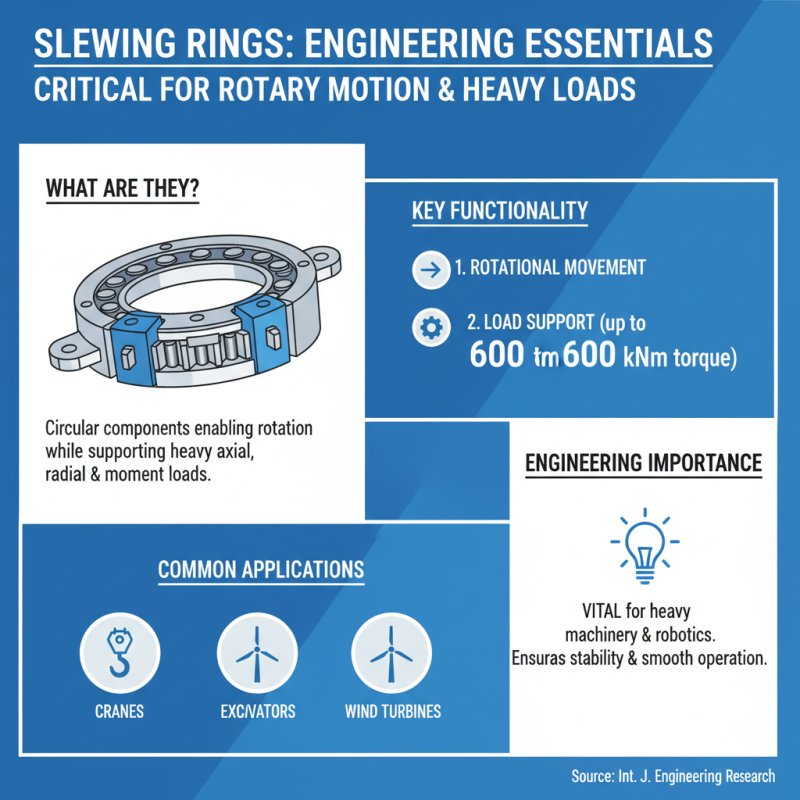
Slewing rings play a crucial role in various engineering applications, particularly in heavy machinery and robotics. These circular components allow for rotational movement while supporting heavy loads. A study from the International Journal of Engineering Research indicates that slewing rings can withstand torque loads exceeding 600 kNm. This makes them essential in cranes, excavators, and wind turbines. Understanding their functionality is vital for engineers.
When considering slewing rings, it’s important to evaluate their design and material. For example, most are produced from high-strength steel to endure stress and wear. Data shows that proper lubrication can enhance their lifespan by up to 50%. Without regular maintenance, performance can decline significantly. Engineers must consider the environment where these rings operate. Dust, moisture, and temperature fluctuations can affect functionality.
The connection between the slewing ring and the machine’s overall performance is significant. A mismatch in specifications can lead to failure. Reports suggest that up to 30% of mechanical failures in rotating systems stem from inadequate slewing ring selection. Selecting the right slewing ring requires attention to detail and a deep understanding of the application’s needs. Balancing cost with performance is crucial but often overlooked, leading to potential long-term issues.
Key Factors to Consider When Selecting a Slewing Ring
When selecting a slewing ring for your project, several key factors must be evaluated. Load capacity is crucial; consider both static and dynamic loads. According to a recent industry report, about 30% of failures in heavy machinery arise from inadequate load assessment. Understanding the weight and operational environment of the machinery can help prevent costly downtimes.
Another factor to prioritize is the slewing ring's material. Common materials include stainless steel and carbon steel, each having unique properties. Stainless steel offers corrosion resistance but can be costlier. On the other hand, carbon steel may require a protective coating in certain environments. A study showed that nearly 25% of components experience performance issues due to material degradation, emphasizing the need for proper material selection.
Precision in manufacturing is equally crucial. Tolerance levels should align with specifications. A small deviation can lead to misalignment, affecting efficiency. Regular maintenance and inspections help address wear and tear, yet even the best products may show signs of wear over time. Understanding these factors ensures a more reliable and effective slewing ring selection.
Ultimate Tips for Choosing the Right Slewing Ring for Your Project
When selecting a slewing ring for your project, it's crucial to consider several key factors. The following chart illustrates the importance of various selection criteria based on industry feedback.
Material Choices for Slewing Rings and Their Impact on Performance
When selecting slewing rings, material choice greatly influences performance. Common materials include steels, aluminum, and polyamide. Steel offers high durability and load capacity. Aluminum is lightweight, yet it has lower load-bearing capabilities. Polyamide provides corrosion resistance but may not withstand heavy loads.
When considering materials, examine your project's specific requirements. Think about the load demands and environmental conditions. For instance, heavy-duty applications should prioritize robust materials like steel. On the other hand, lightweight designs may benefit from aluminum.
Analyze trade-offs in strength and weight.
Tips for selection include conducting thorough research. Consult with experts who have practical experience. They can provide insights into material behavior under various conditions. Testing prototypes can also reveal unforeseen performance issues. Remember, selecting the right material isn’t just about performance; it's crucial for
long-term reliability and safety.
Common Applications and Use Cases of Slewing Rings in Various Industries
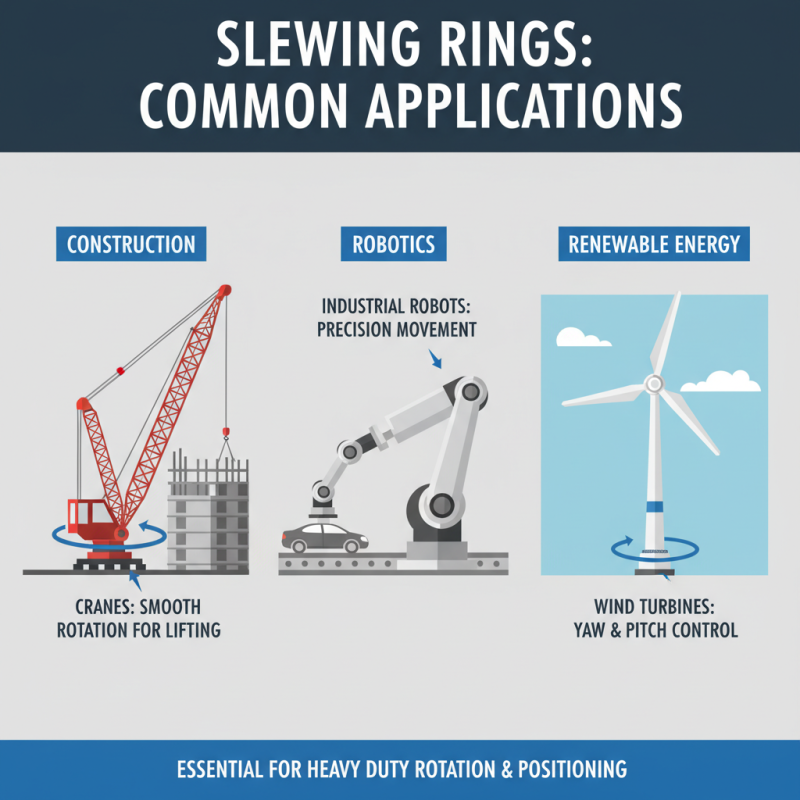
Slewing rings play a critical role in various industries. Their common applications include construction, robotics, and renewable energy. In construction, slewing rings support cranes, allowing them to rotate smoothly. This capability is essential for effective lifting and placing of heavy materials.
In robotics, slewing rings enable precise movement in robotic arms. They enhance the functionality of automated systems, ensuring that tasks are performed efficiently. Similarly, in wind turbines, these rings provide stability and alignment for the turbine blades, optimizing energy capture.
When selecting a slewing ring, consider the load capacity first. Assess how much weight the application will require. Look at the mounting space too; fitting is crucial to ensure optimal operation. The environment matters as well. For outdoor use, moisture-resistant materials can prolong life. Take the time to evaluate your needs thoroughly. Each detail can impact performance and reliability.
Maintenance Tips for Enhancing the Longevity of Slewing Rings
Maintaining slewing rings is crucial for their longevity. Regular inspections can make a significant difference. Look for signs of wear and tear, such as unusual noises or play. Addressing these issues early can prevent costly replacements.
Lubrication plays a vital role in upkeep. Use the recommended lubrication method to minimize friction. Ensure that the grease reaches all moving parts. Over-lubrication can lead to contamination, while under-lubrication may cause premature wear. It’s essential to strike a balance.
Environmental factors also impact performance. Dust and moisture can lead to corrosion. Consider installing protective covers if the conditions are harsh. Regular cleaning can help maintain functionality. Reflect on past maintenance habits—every small effort contributes to improved reliability and performance.