Engineer's Toolbox Visit www.hansarobotics.com
Category Banner

Top Asparagus Optical Sorter Manufacturers?

Choosing among the top Asparagus Optical Sorter manufacturers requires more than comparing brochures or advertised processing speeds. A reliable supplier should understand asparagus grading, not merely sell cameras and conveyors. The right Asparagus Optical Sorter can identify color differences, bruises, broken tips, soil marks, and size variations under demanding production conditions. Small details matter. A damaged tip may reduce the value of an otherwise sound batch.

This guide examines manufacturers through practical and technical criteria. These include optical accuracy, conveyor design, software controls, cleaning access, service response, and integration with existing packing lines. Experienced processors should also review trial results using their own asparagus varieties. Laboratory demonstrations can look impressive. Field performance may differ. Seasonal moisture, uneven shapes, and rapid throughput often expose weaknesses that brochures do not mention.

Trust also depends on transparent specifications and verifiable customer experience. Strong manufacturers explain detection limits, expected rejection rates, maintenance needs, and operator training. They should provide test data without hiding important assumptions. Certifications and export experience can support credibility, but they do not replace direct performance checks. A careful buyer may request sample evaluations, service references, and a realistic return-on-investment estimate. No machine is perfect. Even advanced systems may require calibration when lighting, product temperature, or crop quality changes. That limitation deserves honest discussion. By comparing evidence rather than slogans, processors can identify an Asparagus Optical Sorter that supports consistent quality, reduced manual inspection, and more dependable daily production.
Top Asparagus Optical Sorter Manufacturers?

What Is an Asparagus Optical Sorter and How Does It Work?

Top Asparagus Optical Sorter Manufacturers?

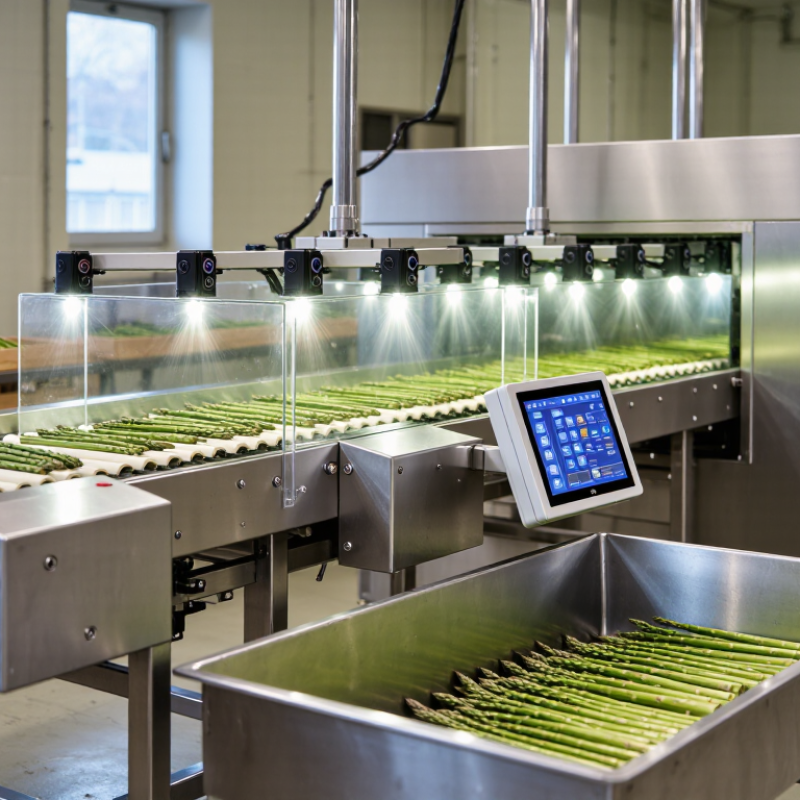
An asparagus optical sorter uses cameras, light sources, software, and air jets to inspect moving spears. RGB cameras examine color, shape, diameter, and visible damage. Near-infrared sensors can detect moisture differences and some internal quality variations. The system compares each spear with programmed standards. A pneumatic valve then removes defective pieces within milliseconds. It is a fast process. Yet it is not magic.

FAOSTAT data reports global asparagus production above 9 million tonnes in 2022, creating strong pressure for consistent grading. Industry equipment reports also show rising automation demand. MarketsandMarkets estimated the food sorting and grading market could grow from about USD 1.8 billion in 2023 to USD 2.7 billion by 2028. These figures explain why manufacturers now combine high-speed imaging with machine-learning software.

In practical use, operators feed asparagus onto a belt with controlled spacing. White spears need different lighting from green spears. Wet surfaces can confuse the camera. Bruising may remain invisible externally. Calibration therefore matters as much as sensor quality. Experienced processors still check sample trays manually, especially after changing varieties or harvest conditions. A sorter may reduce labor and waste, but poor settings can reject valuable produce. That weakness deserves attention when comparing optical sorter manufacturers. (FAOSTAT; MarketsandMarkets, 2023)

Key Features Used to Evaluate Asparagus Optical Sorter Manufacturers

When comparing top asparagus optical sorter manufacturers, evaluate measurable performance rather than polished demonstrations. Ask how their systems detect color, diameter, bruising, tips, and foreign material. High-resolution cameras should work under stable lighting. The software must separate natural variation from real defects. Request results from your own asparagus samples. Test it wet. A dry sample can hide problems. Record miss rates, false rejects, and usable throughput across several runs.

Mechanical design matters as much as image quality. Look for gentle belts, stable spacing, and adjustable drop points. Asparagus can bend, overlap, and bruise easily. A strong sorter should maintain accuracy at the target line speed. Inspect washdown access, stainless construction, drainage, and tool-free cleaning areas. Ask whether calibration can be completed by trained plant staff. Small errors matter. One awkward sensor position may create repeated downtime during cleaning. Also check reject handling. A harsh air blast may damage saleable spears or scatter debris.

Reliable manufacturers provide more than equipment. They should explain installation limits, expected yields, maintenance intervals, and operator training. Ask for documented service response times and spare-parts availability in your region. Independent references from comparable processing lines are valuable. A live factory trial is better than a generic brochure. Still, no trial predicts every season. Crop maturity, moisture, and field damage can change results. That uncertainty deserves honest discussion. Choose a supplier that clearly shares test conditions and admits where performance may fall short.

Leading Asparagus Optical Sorter Manufacturers and Their Solutions

Leading Asparagus Optical Sorter Manufacturers and Their Solutions

Leading asparagus optical sorter manufacturers now focus on gentle handling, accurate defect detection, and simple sanitation. FAOSTAT production data for 2022 placed global asparagus output at roughly 9 million tonnes. That scale increases pressure on processors to reduce manual inspection and product loss. Modern systems use high-speed cameras, near-infrared sensors, and software trained to identify discoloration, hollow stalks, bruising, and foreign material. A practical line can inspect each stalk while preserving tip shape and surface quality. That matters. Asparagus bruises easily.

Reliable manufacturers usually offer customized feeding systems, variable belt speeds, and adjustable rejection settings. Their engineers should test samples from different fields, harvest periods, and moisture levels before installation. USDA grading guidance emphasizes characteristics such as stalk condition, tip quality, and freedom from decay. These standards provide a useful foundation for machine settings, although automated vision cannot replace every human judgment. Operators still need to review borderline pieces, especially thin stalks with natural color variation.

Market forecasts often report optical sorting across grains, nuts, fruit, and vegetables. They may not isolate asparagus accurately. This is an important limitation. Buyers should request verified throughput data, rejection accuracy, false-rejection rates, and cleaning times under real factory conditions. A strong solution also records images and production data for traceability. However, excessive automation can create waste when settings are too aggressive. The best manufacturers support commissioning, operator training, and regular recalibration instead of selling equipment as a one-time fix.

Top Asparagus Optical Sorter Manufacturers? — Leading Solutions Compared

A comparison of common asparagus optical-sorting solution configurations using practical industry performance indicators. The figures represent typical benchmark targets rather than data from any specific company or brand.

Higher values indicate stronger performance. Actual results vary according to asparagus variety, size distribution, lighting conditions, line speed, and product-quality requirements.

How Asparagus Optical Sorters Compare in Accuracy, Speed, and Cost

Top Asparagus Optical Sorter Manufacturers?

Asparagus optical sorters differ most in accuracy, throughput, and total ownership cost. Accuracy depends on camera resolution, lighting, belt stability, and the defect library. Recent research reviews in Computers and Electronics in Agriculture report over 90% classification accuracy in controlled produce-sorting trials. Field conditions are harsher. Wet spears, purple tips, soil, and overlapping bundles can reduce performance.

Speed is usually measured in tonnes per hour, not boxes per minute. Commercial systems often process several tonnes hourly, but actual output falls when operators demand tighter defect removal. A 2023 FAO report identifies poor handling and quality losses as major challenges in fresh produce chains. Faster sorting can reduce waiting time, yet excessive belt speed may increase false rejects. That is an expensive mistake.

Cost includes more than the purchase price. Energy use, software updates, air-jet maintenance, rejected product, and operator training also matter. Deloitte and The Manufacturing Institute estimate that millions of manufacturing roles could remain unfilled by 2030, strengthening the case for automation. Still, labor savings do not guarantee fast payback. A sorter handling 2,000 kilograms per hour may be uneconomical for a small seasonal packhouse. Buyers should request site trials using their own asparagus, defect standards, and peak-season volumes. Independent acceptance testing is essential. I would not trust a brochure alone.

Top Asparagus Optical Sorter Manufacturers? – How Asparagus Optical Sorters Compare in Accuracy, Speed, and Cost
Sorter Configuration Typical Inspection Technology Sorting Accuracy* Throughput Range Typical Product Size Range Estimated Purchase Cost (USD) Best-Fit Application
Entry-Level Color Sorter RGB cameras with air-jet ejection 90%–95% 1.0–2.0 t/h 8–25 mm diameter US$35,000–70,000 Basic color separation and removal of visibly defective spears
Standard Dual-Camera Sorter Top-and-bottom RGB cameras with calibrated lighting 94%–97% 2.0–4.0 t/h 8–30 mm diameter US$70,000–130,000 General fresh asparagus packing and routine defect removal
High-Resolution Multi-Camera Sorter Multi-angle RGB or monochrome cameras with software classification 96%–98.5% 3.0–6.0 t/h 6–32 mm diameter US$120,000–220,000 Premium grading by color, diameter, shape, and visible damage
Advanced AI Vision Sorter High-resolution cameras with machine-learning defect recognition 97%–99% 3.0–7.0 t/h 6–35 mm diameter US$180,000–320,000 High-value products requiring consistent grading and complex defect detection
Optical Sorter with Integrated Sizing Multi-camera vision, diameter measurement, and automated lane control 95%–98% 4.0–8.0 t/h 6–35 mm diameter US$220,000–400,000 Large packing lines combining inspection, sizing, and multiple output grades
*Accuracy refers to the percentage of correctly classified or rejected items under stable lighting, consistent product presentation, and properly calibrated equipment. Actual results vary with asparagus cultivar, moisture, overlap, belt speed, defect type, and operator setup. Throughput and pricing are typical market ranges for new equipment and normally exclude installation, conveyors, packaging machinery, taxes, and site modifications.

What to Consider When Choosing an Asparagus Optical Sorter Manufacturer

Choosing an asparagus optical sorter manufacturer requires more than comparing camera resolution. Start with sorting accuracy on your actual crop. Spears vary in diameter, curvature, color, and tip quality. A supplier should test fresh samples from your fields, not only clean laboratory produce.

FAO’s 2019 State of Food and Agriculture report estimated that 14% of food is lost between harvest and retail. That figure shows why reliable inspection matters. Ask for measurable results, including false-reject rates, detection accuracy, throughput, and product damage. The machine should recognize dirt, bruising, woody sections, and unwanted plant material. USDA Agricultural Marketing Service grading standards can help define acceptable quality levels. However, standards alone do not prove machine performance. I would request several test runs, including wet and mixed-size asparagus. Real production is less tidy.

Tips: Check the details.

Confirm food-contact materials, washdown protection, software updates, and response times for service calls. Request a written maintenance plan. Ask whether operators can adjust thresholds without specialist support. A good manufacturer should explain limitations honestly. Their data should come from repeatable trials, not impressive single images. The PMMI report on food processing automation highlights the value of connected equipment and performance monitoring, but integration can become expensive. Review communication protocols, spare-parts availability, and training costs before signing. An experienced manufacturer may still miss a regional crop issue. That is worth discussing early.