Engineer's Toolbox Visit www.hansarobotics.com
Category Banner

What Is the Best Polymer Surge Arrester in China?

Choosing the best Polymer Surge Arrester in China requires more than comparing prices or product photographs. The right decision depends on voltage level, installation environment, discharge energy, pollution severity, and maintenance access. A coastal substation faces salt fog, while an inland solar plant may experience dust, heat, and sharp temperature changes. These conditions can influence housing performance and long-term insulation reliability.

Experienced engineers usually examine the arrester’s continuous operating voltage, nominal discharge current, residual voltage, creepage distance, and pressure-relief design. They also review type-test evidence, routine inspection records, and compliance with relevant IEC or Chinese standards. Reliable manufacturers should explain their testing process clearly. They should not hide behind impressive certificates. Manufacturing consistency matters just as much. A well-designed product can still fail if sealing, crimping, or material control is weak.

There is no universal winner.

The phrase “best” can therefore be misleading. A model suitable for a 35 kV outdoor network may not fit a compact industrial system. Buyers should compare verified technical data with actual field conditions. Visiting a factory, checking traceability labels, and requesting independent test documentation can reveal important details. I have seen specifications look excellent on paper, yet installation guidance remained unclear. That weakness deserves attention. A dependable Polymer Surge Arrester should offer stable electrical protection, durable weather resistance, practical installation, and responsive technical support. This article examines leading Chinese options through those measurable factors, while recognizing that real performance depends on correct selection, installation, and ongoing inspection.
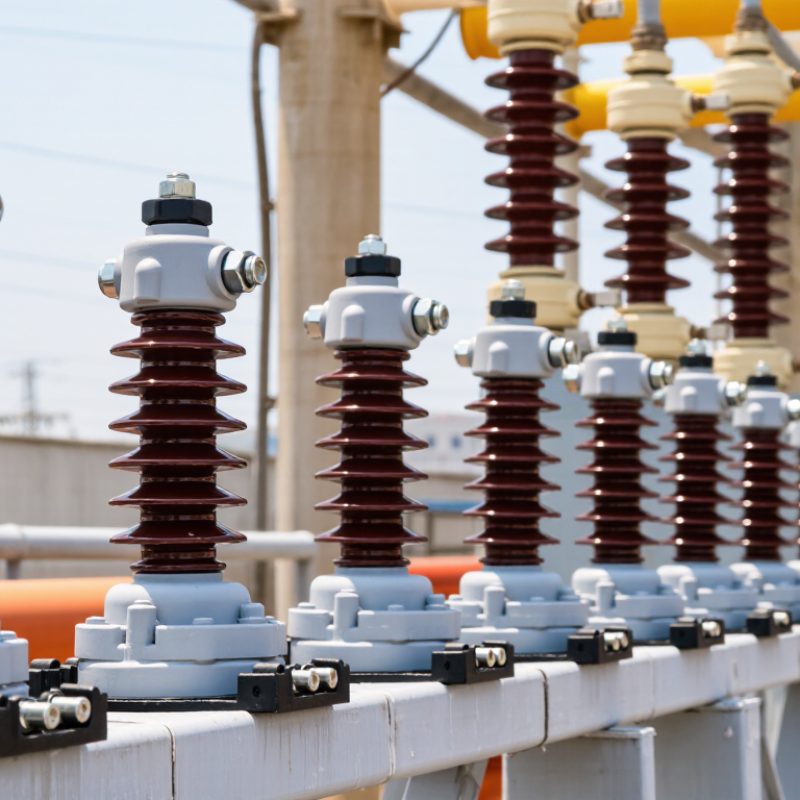
What Is the Best Polymer Surge Arrester in China?

Polymer Surge Arresters in China: IEC 60099-4 and GB/T 11032 Criteria

Choosing the best polymer surge arrester in China requires more than comparing catalog voltage ratings. IEC 60099-4 evaluates metal-oxide arresters through reference voltage, residual voltage, energy capability, thermal stability, and operating duty tests. GB/T 11032 provides China’s corresponding technical framework and should be checked for the intended installation conditions.

Start with the system’s maximum continuous operating voltage, temporary overvoltage, and insulation level. Then review the arrester’s Uc, Ur, nominal discharge current, and protective level. In coastal substations, salt deposits can challenge polymer housings. In inland areas, dust and temperature changes may matter more. Good designs also verify sealing, mechanical strength, aging resistance, and pressure-relief performance. Laboratory compliance is important, but field installation still decides whether the protection performs well.

Tips: Request test reports, not only certificates. Confirm whether IEC 60099-4 and GB/T 11032 results match the actual model. Check creepage distance, altitude limits, pollution class, and mounting torque. A rushed selection can leave insufficient insulation coordination. I have seen voltage data look impressive while the energy duty was poorly matched. That deserves a second review.

How 10 kA Nominal Discharge Current Defines Arrester Performance

What Is the Best Polymer Surge Arrester in China?

A polymer surge arrester rated at 10 kA nominal discharge current is built for demanding distribution networks. This rating usually refers to an 8/20 microsecond impulse current. It does not mean the arrester can carry 10 kA continuously. That distinction matters.

In field inspections, engineers should examine more than the printed current value. A reliable arrester needs suitable maximum continuous operating voltage, low residual voltage, and stable sealing. Its polymer housing should resist moisture, ultraviolet exposure, and sudden temperature changes. In coastal substations, salt deposits can create surface leakage. In northern regions, freezing water may expose weak seals. Testing under recognized international or national standards adds useful evidence, but paperwork alone is not enough. Installation quality still decides performance.

Tips: Match the arrester voltage to the system grounding method. Check the discharge path length. Keep connecting leads short and straight. Inspect cracked housings, loose terminals, and corrosion during maintenance. A 10 kA rating offers meaningful protection, but it cannot correct poor coordination or an unsuitable mounting position.

The practical choice is therefore not simply the highest current rating. Compare residual voltage, energy capability, pollution resistance, and test records. Ask for traceable production data. Also question unclear claims. Some specifications look impressive until actual system conditions are considered. That is where selection becomes less certain, and more honest engineering is needed.

Comparing 1.2/50 μs Lightning Impulse and 8/20 μs Current Ratings

What Is the Best Polymer Surge Arrester in China?

Comparing 1.2/50 μs Lightning Impulse and 8/20 μs Current Ratings

When engineers ask for the best polymer surge arrester in China, the ratings deserve careful attention. A higher number does not automatically mean better protection.

Polymer housing offers strong insulation, light weight, and improved outdoor resistance. However, design quality also depends on sealing, pressure relief, zinc oxide elements, and stable manufacturing control. That detail matters.

The 1.2/50 μs rating describes a standard lightning impulse voltage applied during testing. It shows how the arrester withstands a fast-rising overvoltage. The 8/20 μs rating describes the shape of the discharge current impulse. It indicates how much surge current the arrester can conduct safely. These values are related, but they are not interchangeable. One is voltage. Another is current.

For Chinese distribution systems, engineers should compare rated voltage, maximum continuous operating voltage, residual voltage, and nominal discharge current. Local lightning density and grounding conditions also affect the choice. A strong 8/20 μs current rating cannot compensate for excessive residual voltage. Similarly, a high 1.2/50 μs withstand value may offer limited protection if coordination is poor.

Field inspections sometimes reveal a practical mistake: buyers focus on catalog numbers and overlook installation distance. Long connecting leads can increase protective voltage during a real surge. Test certificates, impulse records, aging data, and factory quality controls deserve equal attention. Specifications can look convincing, yet their test conditions may not match the site.

What Is the Best Polymer Surge Arrester in China? – Comparing 1.2/50 μs Lightning Impulse and 8/20 μs Current Ratings

Comparison Item Entry-Level Distribution Standard Distribution Heavy-Duty Distribution Station-Class Application
Typical system voltage range 3–6 kV class 6–12 kV class 10–24 kV class 35 kV and above
Common continuous operating voltage, Uc Approximately 2.55–5.1 kV Approximately 5.1–10.2 kV Approximately 8.4–19.2 kV Selected according to the system grounding and temporary overvoltage study
8/20 μs nominal discharge current, In Typically 2.5–5 kA Typically 5–10 kA Typically 10 kA Typically 10–20 kA, depending on the station design
8/20 μs meaning A standardized current impulse with an approximately 8 μs front time and 20 μs time to half-value. It is used to evaluate discharge capability and protective performance.
1.2/50 μs lightning impulse A standardized voltage impulse with an approximately 1.2 μs front time and 50 μs time to half-value. It is used for insulation coordination and impulse withstand testing; it is not an 8/20 μs current rating.
Typical protective level, Up Lower voltage level suitable for compact distribution equipment Balanced protection for transformers, cables, and switchgear Low residual voltage with increased energy withstand Specified by the arrester manufacturer and coordinated with equipment insulation
Polymer housing benefit Lightweight and resistant to mechanical damage Hydrophobic silicone surface helps reduce pollution flashover risk Suitable for outdoor exposure when sealing and aging performance are verified Reduced shattering hazard compared with porcelain during severe failure
Recommended application Small distribution transformers and lightly exposed overhead lines General medium-voltage distribution networks High-lightning-density areas, long overhead feeders, and industrial substations Substations, busbars, transformer terminals, and high-energy switching locations
Key selection priority Correct Uc and adequate insulation coordination 10 kA class capability, suitable residual voltage, and reliable sealing Energy withstand, thermal stability, pollution performance, and line discharge capability Line discharge class, energy rating, thermal stability, and verified type-test performance
Best-fit conclusion Cost-efficient for moderate exposure Best general-purpose choice for many medium-voltage networks Preferred where lightning frequency and system energy are higher Best for high-energy substation duty when the complete specification is verified
Selection note: The “best” polymer surge arrester is not determined by the highest 8/20 μs current value alone. Confirm the rated voltage, continuous operating voltage, residual voltage at the specified current, energy or line discharge class, temporary overvoltage capability, pollution level, housing design, and compliance with IEC 60099-4 or the applicable Chinese equivalent, GB/T 11032. The voltage and current categories above are generic engineering ranges rather than brand-specific product ratings.

Evaluating Silicone Rubber Housing, Sealing, and Pollution Resistance

What Is the Best Polymer Surge Arrester in China?

In China, the best polymer surge arrester is not chosen by voltage rating alone. Field performance often depends on three quiet details: silicone rubber, sealing, and pollution resistance. A silicone rubber housing should remain flexible after years of sunlight, heat, and cold. Its hydrophobic surface helps water form droplets instead of a continuous conductive film. This matters near coastlines, chemical plants, and dusty construction areas.

The sealing system deserves equal attention. Water can enter through weak interfaces, damaged gaskets, or poor bonding. During site inspections, technicians should check housing joints, end fittings, and pressure-relief areas carefully. Good designs undergo thermal cycling, moisture tests, and routine production checks. Testing should follow recognized requirements, such as IEC 60099-4. Still, test results cannot replace proper installation.

Pollution resistance is more than a laboratory label. Salt deposits may collect beneath sheds, while cement dust can create uneven leakage paths. A well-shaped shed profile supports natural washing during rain. Silicone rubber may also recover some hydrophobicity after contamination, but recovery is not unlimited. It is not flawless. Heavy pollution, bird activity, and long dry periods can still increase electrical stress. Regular inspection remains necessary. One missed crack matters. Engineers should compare local climate data, contamination levels, sealing records, and maintenance access before selecting an arrester. That practical comparison is often more reliable than a simple product ranking.

Selecting China’s Best Arrester by TOV, Energy, Testing, and Certification

What Is the Best Polymer Surge Arrester in China?

Selecting China’s best polymer arrester starts with TOV, not price. Continuous operating voltage must match the real system voltage, including temporary overvoltage duration. A 10-second fault is not equivalent to a two-hour neutral shift. CIGRE Technical Brochure 544 highlights moisture ingress, contamination, and thermal aging as recurring field concerns. Therefore, inspect the housing seal, shed profile, and pressure-relief design closely.

Energy capability deserves equal attention. Calculate expected discharge energy in kJ/kV, then compare it with the arrester’s line-discharge class and duty-cycle results. IEC 60099-4 specifies testing for thermal stability, high-current impulses, and long-duration current impulses. IEEE C62.11 also provides testing guidance for metal-oxide surge arresters. Ask for complete test curves, not only a single energy figure. Numbers can hide assumptions.

Testing must include type, routine, and sampling records. Independent laboratory reports improve confidence, while factory traceability connects each unit to its production batch. Certification should be verified through the issuing body, with standards, dates, and tested ratings clearly listed. A certificate is evidence, not immunity. Field experience still matters. I would review failure records from similar voltage levels and polluted environments before approval. Catalog data looks precise. Real networks remain less cooperative.