Engineer's Toolbox Visit www.hansarobotics.com
Category Banner

What Are the 10 Best Bead Mills for Global Buyers?

Choosing the right Bead Mill can influence product quality, operating costs, and production stability. Global buyers often compare models from different regions, yet specifications may not be directly comparable. A machine rated for laboratory testing may not suit continuous industrial processing.

This guide examines 10 leading bead mills for international purchasing decisions. It considers grinding efficiency, chamber design, bead compatibility, cooling control, maintenance access, and energy use. It also reviews practical details, such as rotor materials, seal performance, feed viscosity, and achievable particle size. These factors matter when processing coatings, inks, pigments, cosmetics, ceramics, or advanced materials.

Real-world purchasing requires more than reading a brochure. Buyers should request test data, service records, installation requirements, and clear warranty terms. Supplier response time also deserves attention. A low purchase price can become expensive when spare parts arrive slowly or technicians lack experience. That risk is easy to underestimate.

Not every impressive specification proves better performance. Laboratory results may change under factory conditions, especially with heat-sensitive or highly viscous materials. Our comparison therefore focuses on evidence, application fit, and long-term usability. Some rankings remain debatable, because production goals differ between buyers. That is worth admitting.

The following overview helps engineers, procurement teams, and distributors identify suitable options with greater confidence. It does not replace pilot testing or professional validation. Instead, it provides a practical starting point for asking better questions and avoiding costly assumptions.
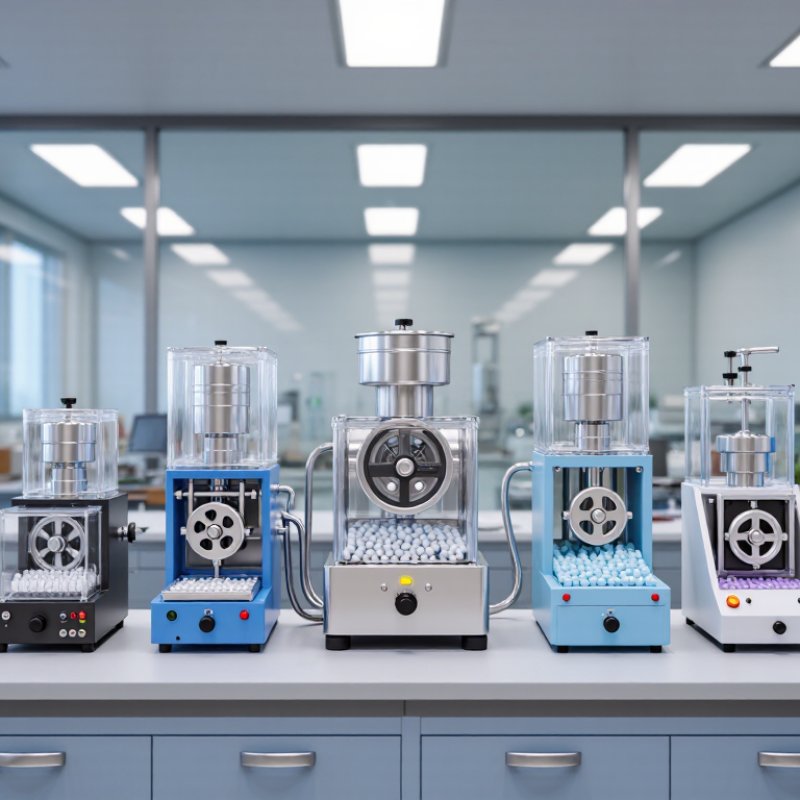
What Are the 10 Best Bead Mills for Global Buyers?

How Bead Mills Achieve Submicron Particle Sizes Below 1 µm

Bead mills reach submicron sizes through intense, repeated media collisions. A rotating agitator moves tiny grinding beads through a liquid suspension. Each collision creates shear, compression, and friction around larger particles. With suitable conditions, particles below 1 µm become achievable.

Media size matters. Smaller beads provide more contact points and improve fine grinding efficiency. However, they can increase pressure, heat, and separation difficulties. Agitator speed also affects energy transfer, but excessive speed may damage temperature-sensitive materials. Cooling jackets help control heat during extended processing. Stable feed flow and correct viscosity support consistent residence time. Poor dispersion can leave hidden agglomerates behind.

For global buyers comparing ten bead mills, request D50 and D90 test data under comparable conditions. Ask whether measurements use laser diffraction or dynamic light scattering. These methods may produce different results. A reliable supplier should disclose chamber volume, bead material, wear rate, power input, and cleaning procedures.

In plant trials, I would inspect the final slurry under a microscope and verify results through repeated sampling. One test is not enough.

The uncomfortable truth is that “below 1 µm” may describe an average value, not every particle. Process records, cooling performance, and separator stability often matter more than impressive specifications.

How 0.1–3 mm Media and 10–20 m/s Tip Speed Affect Selection

What Are the 10 Best Bead Mills for Global Buyers?

Selecting the ten best bead mills starts with media size, not catalog ranking. Media from 0.1 to 0.3 mm supports fine dispersion and narrow particle targets. Larger media, from 1 to 3 mm, usually handles tougher pre-grinding duties. The chamber, separator, pump, and cooling design must match that choice. A tiny separator can restrict flow when coarse slurry enters the mill. That mistake is more common than many buyers expect.

Tip speed changes the selection significantly. At 10–14 m/s, the process often favors temperature-sensitive coatings, pigments, and biological formulations. At 15–20 m/s, stronger impact and faster size reduction may suit hard mineral slurries. However, higher speed also increases heat, wear, and power demand. During commissioning trials, I would measure outlet temperature, product fineness, pressure, and media loss together. One attractive particle-size result does not prove a good machine. Sometimes, the “fastest” mill creates unstable viscosity and longer cleaning time.

Tips: Request a test using your real formulation and chosen media size. Check whether the separator prevents 0.1 mm media escape. Confirm cooling capacity at 20 m/s. Ask for noise, wear, and energy data, not only capacity figures. Leave room for doubt; laboratory results can change at production scale. A lower speed may deliver better consistency, even when the brochure promises maximum output. Keep spare screens and seals available, especially where international delivery could delay maintenance.

What Are the 10 Best Bead Mills for Global Buyers? - How 0.1–3 mm Media and 10–20 m/s Tip Speed Affect Selection

Rank Mill Configuration Typical Chamber Volume Recommended Media Size Practical Tip Speed Typical Throughput Best-Suited Materials Selection Advantage Main Limitation
1 Horizontal Disc Bead Mill 0.5–1,000 L 0.3–2.0 mm 10–18 m/s 5–10,000 L/h Pigments, coatings, inks, agrochemical suspensions Strong general-purpose performance and continuous processing capability Disc wear and media separation require regular inspection
2 Horizontal Pin Bead Mill 1–1,500 L 0.1–1.0 mm 12–20 m/s 10–15,000 L/h Fine pigments, battery slurries, ceramic dispersions High energy density and efficient use of small media Higher cooling demand and greater sensitivity to contamination
3 Horizontal Pinless Agitator Mill 0.3–800 L 0.1–0.8 mm 10–16 m/s 3–8,000 L/h Low-viscosity coatings, inkjet fluids, functional dispersions Reduced internal obstruction and relatively gentle product handling May require multiple passes for highly difficult-to-grind solids
4 Vertical Agitated Bead Mill 1–2,000 L 0.5–3.0 mm 6–14 m/s 5–12,000 L/h Mineral slurries, ceramic materials, fillers and extenders Suitable for coarse-to-medium grinding with robust operation Usually less efficient than horizontal mills for submicron products
5 Laboratory Basket Bead Mill 0.05–2 L 0.3–2.0 mm 8–15 m/s 0.1–30 L/h Laboratory coatings, colorants, personal-care formulations Fast formulation screening with small batches and simple cleaning Limited scale and potentially higher batch-to-batch variation
6 Recirculation Bead Mill System 0.5–500 L chamber 0.1–1.5 mm 10–20 m/s 2–5,000 L/h Nanodispersions, pharmaceutical suspensions, specialty chemicals Multiple passes improve residence-time control and particle-size consistency Requires pumps, piping and careful control of heat buildup
7 Closed-Loop Nano Bead Mill 0.05–100 L 0.1–0.5 mm 14–20 m/s 0.2–1,000 L/h Drug nanosuspensions, advanced ceramics, electronic materials Best fit for narrow particle-size distributions and high fineness targets High operating precision, cooling requirements and media-separation demands
8 Single-Pass Bead Mill 0.5–300 L 0.3–1.5 mm 10–18 m/s 5–4,000 L/h Routine pigment concentrates, industrial coatings and color pastes Simple flow path and lower system complexity for standard products May not achieve the required fineness in one pass for hard-to-disperse products
9 High-Viscosity Bead Mill 1–1,000 L 0.5–3.0 mm 8–16 m/s 2–6,000 L/h Sealants, adhesives, high-solids coatings and battery pastes Maintains circulation and dispersion performance with heavier formulations Higher torque, pumping pressure and cleaning effort may be required
10 Scalable Modular Bead Mill Line 0.5–2,000 L per module 0.1–2.0 mm 10–20 m/s 5–20,000 L/h Multi-product plants, contract processing and global production sites Allows capacity expansion, parallel processing and flexible product changeover Higher capital cost and more demanding process integration
Selection note: Smaller media, especially 0.1–0.5 mm, generally increases the number of stress events and supports finer particle sizes, but it also raises the need for efficient media separation, clean feed material and precise temperature control. Increasing tip speed from approximately 10 to 20 m/s usually raises specific energy input and grinding intensity, while also increasing heat generation, wear and power demand. Actual performance depends on feed particle size, solids loading, viscosity, formulation chemistry, media density and required product fineness.

Which 10 Bead Mills Lead in Scale, Throughput, and Energy Efficiency

What Are the 10 Best Bead Mills for Global Buyers?

A practical review of bead mills should measure scale, throughput, and energy efficiency together. Scale matters. The ten strongest configurations include horizontal production mills, vertical mills, high-flow circulation mills, compact laboratory mills, ceramic-bead systems, metal-bead systems, narrow-gap mills, multi-chamber mills, cooling-jacketed mills, and automated continuous mills. Each design serves a different operating range. A large chamber may support higher output, but it can waste energy during small-batch production. Buyers should compare usable chamber volume, not only advertised capacity.

Throughput depends on more than motor power. Operators should examine slurry viscosity, feed stability, bead loading, separator design, and residence time. In practical trials, a stable feed often improves productivity more than a larger motor. Energy performance is best judged through kilowatt-hours per tonne, outlet temperature, and product pass count. Effective cooling protects sensitive materials and reduces unplanned pauses. Some mills achieve excellent fineness quickly, yet require frequent cleaning. That weakness matters in factories with strict production schedules.

Reliable selection requires documented test data, service access, and operating experience in similar climates. Ask for particle-size results at several flow rates. Check whether spare screens, seals, and wear parts are locally available. Global buyers should also inspect noise, vibration, sanitation, and control-system compatibility. Small errors matter. A mill that looks efficient on paper may perform poorly with unstable viscosity or oversized beads. No ranking is perfect; real material trials remain essential before purchasing.

How Materials, Cooling Systems, Automation, and ISO 9001 Shape Comparison

What Are the 10 Best Bead Mills for Global Buyers? The answer depends on materials, cooling, automation, and quality controls.

A mill handling ceramic slurry needs different internals than one processing pigments or battery materials. Zirconia or hardened steel beads can improve wear resistance, but they may introduce contamination risks. Buyers should request particle-size distribution data, bead-loss records, and test results from comparable materials.

Cooling design deserves close inspection. High-speed grinding converts much of the input energy into heat. A narrow chamber jacket may struggle during continuous production, especially with viscous formulations.

The International Energy Agency reports that industry consumes about 37% of global energy. Efficient motors, controlled flow rates, and heat recovery can therefore influence operating costs beyond the purchase price.

Temperature sensors should show stable readings near the grinding chamber, not only at the coolant outlet. Small detail. Often overlooked.

Automation improves repeatability through recipe control, pressure alarms, and automatic shutdowns. However, more software does not guarantee better results. Operators still need practical training and clear maintenance access.

ISO’s Survey of Management System Standard Certifications reports more than one million ISO 9001 certificates worldwide, showing the value of documented quality systems. For global buyers, ISO 9001 evidence should include calibration records, corrective actions, traceability, and supplier controls.

I would not rank a mill highly from a brochure alone. Factory trials remain essential, and my own comparison would leave room for revision after production-scale testing.

How Buyers Verify Safety, ATEX Compliance, and Total Cost of Ownership

For global buyers, the 10 best bead mills are not chosen by speed alone. Safety evidence must come before laboratory claims. I would request the technical file, risk assessment, operating manual, and test certificates for every shortlisted machine. The EU ATEX framework requires equipment to match its intended explosive atmosphere zone and equipment category. A certificate without the correct zone, gas group, or temperature class is not enough. Small detail. Serious consequence.

Buyers should inspect grounding points, enclosure protection, pressure relief, solvent compatibility, and bearing temperature controls. IEC 60079 guidance provides the technical foundation for equipment used in potentially explosive atmospheres. The European Commission’s ATEX guidance also stresses documented conformity and correct installation conditions. Ask for the declaration of conformity, notified-body references, and maintenance limits. Do not accept “ATEX-ready” as proof. That phrase is vague, and sometimes dangerously convenient.

Total cost of ownership needs equal attention. The U.S. Department of Energy reports that motor-driven systems can represent about 50% to 70% of industrial electricity consumption. A bead mill with lower purchase cost may consume more power, media, cooling water, and labor. Compare kWh per kilogram, uptime, seal replacement intervals, and cleaning time. MarketsandMarkets’ industrial equipment studies repeatedly identify energy efficiency and predictive maintenance as major purchasing factors. Still, published figures may use different test conditions. Buyers should repeat trials with their own formulation, viscosity, throughput, and target particle size. A perfect spreadsheet can still be wrong.

What Are the 10 Best Bead Mills for Global Buyers?

A practical 100-point screening model for comparing bead mills without relying on brand names. The criteria reflect real purchasing requirements: explosion protection, technical documentation, process safety, operating efficiency, and total cost of ownership.

ATEX applicability depends on the installation and hazardous-area classification. Buyers should verify the equipment certificate, zone/category suitability, conformity documentation, guarding, risk assessment, maintenance requirements, energy consumption, wear-parts cost, and service support before final selection. The weighting shown is a procurement benchmark, not a supplier ranking.